
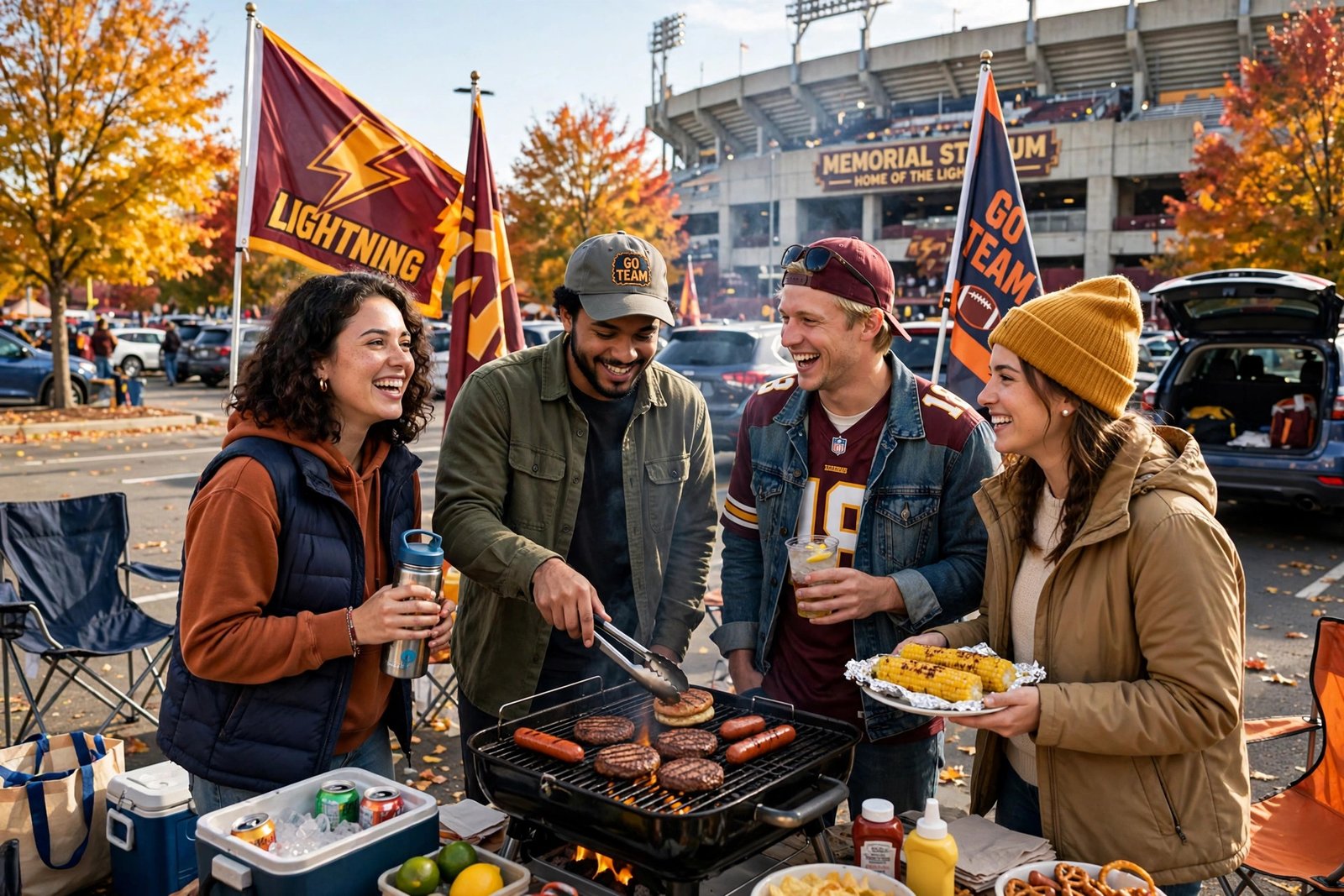
Long before the first whistle blows, the real party is already underway outside the stadium. In parking lots across America, fans fire up grills, unfold tables, toss footballs, and turn asphalt into a festival. This is tailgating, one of the most beloved traditions in American sports culture, and for millions of fans it is as much a part of game day as the game itself. Whether it is a college Saturday in the South or a Sunday afternoon outside an NFL stadium, the parking-lot party has its own rules, rituals, and flavors, and it brings together people who might otherwise never share a meal.
Tailgating is hard to define in a single sentence because it is many things at once: a picnic, a pep rally, a family reunion, and a neighborhood block party rolled into one. What unites every version is the setting and the spirit. Fans gather near their vehicles hours before kickoff, cook food outdoors, play lawn games, and celebrate their team with friends, family, and often complete strangers who happen to wear the same colors. The game gives everyone a reason to gather, but the tailgate is often the memory that lasts longest.
Where Tailgating Began
The roots of tailgating reach back to the earliest days of American football. Some of the first football games, such as Rutgers versus Princeton in 1869 and Yale versus Harvard in 1894, included pregame gatherings in which fans traveled to the game with food and drink. People arrived in horse-drawn carriages and often brought baskets of food into the spectator area, gathering naturally near the rear of their carriages. The modern name came much later, but the instinct was already there: get to the game early, bring food, and make a day of it.
As football grew in popularity, teams traveled farther and fans followed. The arrival of the automobile changed everything. Once families could drive themselves to the game, they needed parking areas near the field, and those parking areas became social spaces. Fans arrived earlier, stayed longer, decorated the area around their vehicles, and moved from simple sandwiches to more elaborate outdoor cooking. By the early 2000s, the tradition was firmly established at college and professional games alike, and it has kept growing ever since.
Historians still debate the exact origin story, and that is part of the charm. Some accounts point to Civil War-era picnics near battlefields, others to the first college games, and still others to the station-wagon era of the 1930s, when fold-down tailgates made serving food from a vehicle practical. The safest way to describe it is that tailgating grew gradually, over decades, as fans found easier and more enjoyable ways to eat, gather, and make the hours before kickoff part of the fun. You can read a fuller account of this history in the Encyclopedia.com entry on tailgating.
What a Classic Tailgate Looks Like
Walk through any busy tailgate lot on a fall Saturday and you will see a familiar scene, repeated with local variations. A grill sends up smoke and the smell of burgers, sausages, or barbecue. A cooler holds drinks on ice. A folding table carries chips, dips, and side dishes. Nearby, someone tosses a bean bag in a game of cornhole, someone else throws a football, and a portable speaker plays music. Team flags wave from tents and truck beds, and jerseys in the home colors are everywhere.
The food is the heart of it. Burgers and hot dogs are the classics, but regional pride shapes the menu. In the South you may find slow-cooked barbecue and fried chicken. In the Midwest, bratwurst is a point of honor. In Texas, chili and brisket rule. In New England, seafood and clam chowder sometimes make an appearance. The point is rarely fine dining. It is generous, unfussy food, cooked outdoors and shared freely, often with people who wandered over from the next tent.
Games matter almost as much as food. Cornhole is the undisputed king of tailgate games, but ladder toss, washers, and simple catch all have their fans. These games serve a social purpose: they give strangers something to do together and give regulars a friendly rivalry before the real rivalry begins inside the stadium. Kids chase footballs between parked cars while adults debate the starting lineup, and the whole lot hums with anticipation.
College Tailgating: A Culture of Its Own
College football is where tailgating culture runs deepest. At many schools, the pregame gathering is a full-day event, and at some it begins days ahead of time. The Grove at Ole Miss, a shaded ten-acre area in the center of campus, is one of the most famous examples: on game weekends it fills with tents, tables, and dressed-up fans in a scene that feels closer to a garden party than a parking lot. Other schools have their own legendary lots and traditions, from Louisiana’s Cajun-flavored spreads to the boat-filled scene at Washington’s Husky Stadium.
College tailgates also carry a strong sense of homecoming. Alumni return year after year to the same spot, sometimes the same parking space, and reunite with old friends. Families pass down their tailgate setups like heirlooms. Students learn the rituals from older fans. For many graduates, the tailgate is the real reunion, and the game is the excuse. That continuity is why college tailgating feels less like an event and more like a community tradition.
There is also a friendly one-upmanship to it. Fans compete over the best setup, the best food, and the most elaborate decorations. Some groups arrive in decked-out RVs with televisions, smokers, and full kitchens. Others keep it simple with a folding grill and a cooler. Both approaches are respected, because the unwritten rule of the lot is hospitality: if you have food, you share it, and if someone needs a chair, you find one.
NFL Tailgating and the Sunday Ritual
Professional football brought tailgating to a wider audience. As NFL teams moved into large stadiums with expansive parking lots in the 1970s, parking-lot parties became a regular part of pro game day. Today, Sunday tailgates are a weekly ritual for fans across the country, and some lots open hours before kickoff to accommodate the crowds. The atmosphere differs from college lots in tone: fewer students, more families and long-time season ticket holders, and often a more organized layout with designated tailgating zones.
The NFL tailgate also reflects its city. In Buffalo, fans famously brave freezing weather and jump through tables in a tradition that has become a badge of honor. In Kansas City, barbecue is serious business, and the lots smell of smoke for hours before kickoff. In Green Bay, where the stadium sits in a residential neighborhood, the whole town becomes part of the pregame scene. Each city’s version tells you something about the place itself, not just its team.
For many fans, the tailgate also solves a practical problem: stadium food is expensive, and a home-cooked meal in the lot tastes better and costs less. But the savings are rarely the real motivation. People tailgate because they enjoy it, because their friends are there, and because the hours before the game have become inseparable from the game itself.
How to Throw Your First Tailgate
If you have never tailgated, the good news is that the barrier to entry is low. You do not need an RV or a smoker. Start with the basics: a portable grill or a slow cooker, a cooler with ice, folding chairs, a table, and enough food and drink for your group plus a little extra for neighbors. Check your stadium’s tailgating rules before you go, since policies on open flames, alcohol, tent sizes, and lot opening times vary widely.
Arrive early, because the best spots fill fast and the fun builds gradually. Set up with room to move, keep walkways clear, and introduce yourself to the groups around you. Bring games if you have them, and bring trash bags, because leaving your spot clean is part of the etiquette. Dress for the weather and wear comfortable shoes, since you will be on your feet for hours on asphalt or grass.
Food planning matters more than fancy equipment. Choose dishes that travel well and can be served at outdoor temperatures for a few hours. Burgers, hot dogs, and bratwurst are forgiving on a grill. Chili, pulled pork, and baked beans work beautifully in a slow cooker. Bring a mix of cold drinks, water, and snacks for grazing, and remember that feeding people well is the fastest way to make friends in the lot.
Safety is part of good hosting too. Keep raw meat separate from cooked food, keep cold food on ice, and never leave a grill unattended. If your group includes children, agree on a meeting point in case anyone gets separated in the crowd. And plan your exit: the lots empty slowly after the game, so many seasoned tailgaters linger, pack up at a relaxed pace, and let traffic thin out before heading home.
Tailgating Beyond Football
Although football remains the heartland of tailgating, the idea has spread. Fans now tailgate before concerts, NASCAR races, soccer matches, and baseball games. The formula translates easily: a big event, a parking area, food cooked outdoors, and people who want to celebrate together. Concert tailgates have their own flavor, with fans sharing set-list predictions and memorabilia stories before the gates open.
The tradition has also inspired a whole economy of tailgate gear, from portable grills and folding furniture to team-branded tents and coolers. Television segments and social media accounts celebrate the best setups, and cookbooks devoted to tailgate recipes fill bookstore shelves every fall. What began as fans eating sandwiches from a carriage has become a full-blown American pastime in its own right.
There is something deeply American about the whole ritual. It is informal, democratic, and open to anyone willing to show up. You do not need a ticket to join a tailgate, and you do not need to know anyone. Show up wearing the colors, bring something to share, and you belong. In a country where people often feel divided, the parking lot before the game remains one of the few places where strangers become neighbors for an afternoon.
Frequently Asked Questions
What exactly is tailgating? Tailgating is a pre-game social gathering in a stadium parking lot or nearby area, where fans cook food, play games, and socialize before an event, usually a football game. The name comes from gathering around the lowered tailgate of a vehicle.
When did tailgating start? There is no single founding date. Pregame picnics accompanied early college football games in the late 1800s, and the practice grew alongside automobile ownership in the 1900s, with the modern form taking shape in the mid-20th century as portable grills and coolers became common.
Do you need a ticket to tailgate? In most cases, no. Tailgating happens outside the stadium, so you can join the party without a game ticket, though some lots require a parking pass or have their own entry rules.
What should I bring to my first tailgate? The essentials are food, drinks, a cooler, chairs, and a grill or slow cooker if you plan to cook. Add games, sunscreen or warm layers depending on the weather, and trash bags for cleanup.
Is tailgating only for football? No. Football is the most common setting, but fans tailgate before concerts, races, and other sporting events wherever parking and outdoor gathering are possible.
Are there rules for tailgating? Yes, and they vary by stadium. Common rules cover lot opening times, open flames, alcohol, tent sizes, and cleanup. Always check the stadium’s policy before game day.