
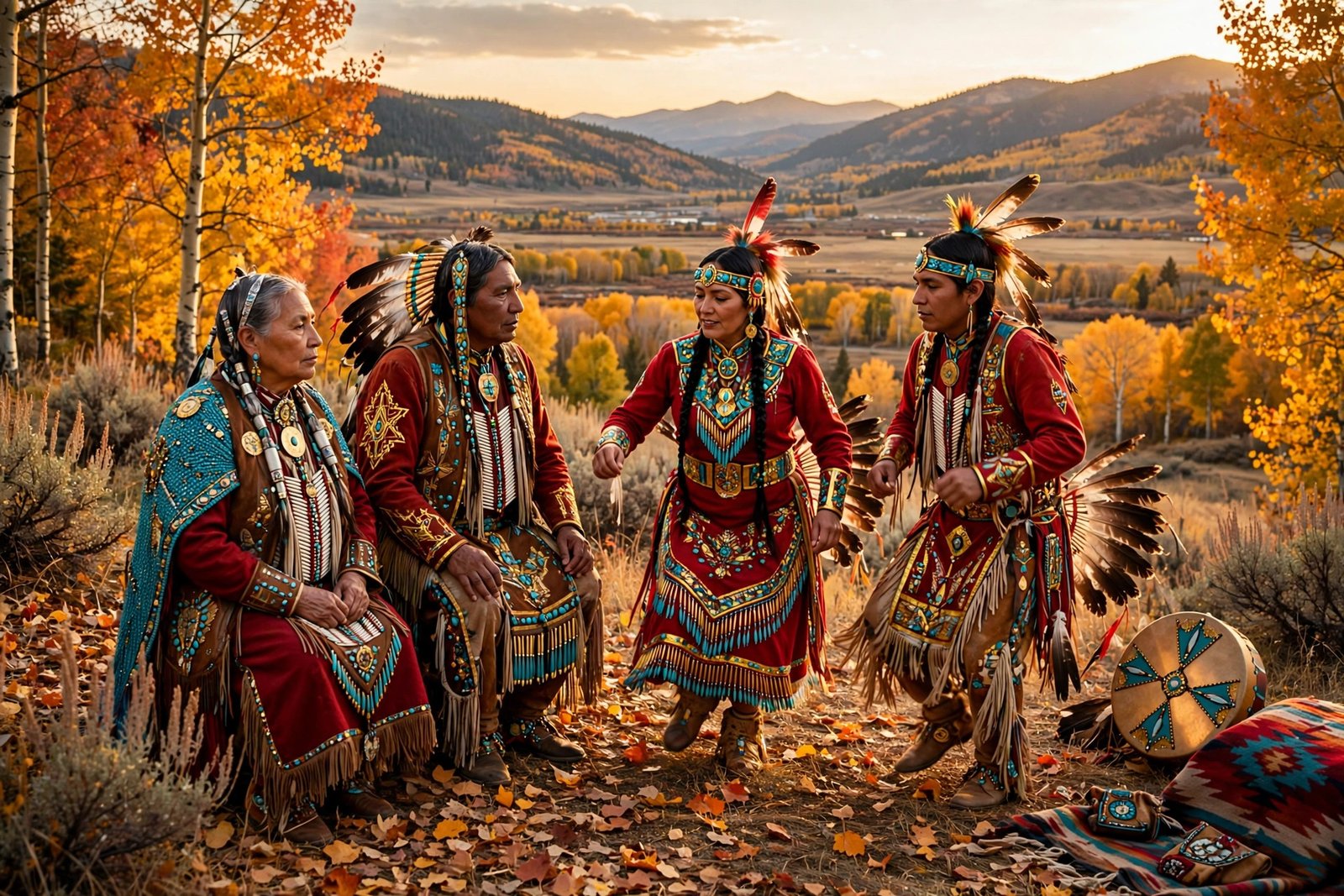
Every November, the United States pauses to recognize the histories, cultures, and living contributions of Native American peoples. Known as National Native American Heritage Month, the observance is a chance to look beyond a single story or a single day and to spend a full month learning about the hundreds of distinct Tribal Nations whose homelands stretch across this continent. It is a time for museums to mount exhibitions, for schools to teach fuller histories, for national parks to highlight Indigenous connections to the land, and for families to discover books, films, art, and events created by Native voices themselves.
For many Americans, November brings a first introduction to Native history through a classroom lesson or a museum visit. For Native communities, the month is something deeper: a celebration of survival, creativity, and sovereignty that continues all year long. Tribal Nations are not relics of the past. They are living governments, cultures, and communities, with their own languages, laws, traditions, and contemporary achievements in fields from medicine and law to art, athletics, and public service. Heritage Month is an invitation to meet that present-tense reality with curiosity and respect.
This guide explains how November became Native American Heritage Month, where to learn more, and how to observe it in a thoughtful way. Whether you are planning a museum trip, looking for classroom resources, or simply want to understand the month better, the official sources linked throughout this article are a reliable place to start.
How November Became Native American Heritage Month
The roots of Native American Heritage Month go back decades before it became a month-long national observance. In the early twentieth century, Native leaders and advocates pressed for a day of recognition. One early milestone came in 1915, when the annual Congress of the American Indian Association meeting included a proclamation about a day honoring Native peoples, and in 1916 New York became the first state to declare an American Indian Day. Over the following decades, other states adopted their own observances on different dates, and the idea of a national recognition slowly gained ground.
A turning point arrived in 1990, when Congress passed a joint resolution designating November 1990 as National American Indian Heritage Month, and President George H. W. Bush signed it into law. Since then, every president has issued an annual proclamation continuing the observance each November. The name has evolved over time to National Native American Heritage Month, reflecting the language many Native people and Tribal Nations use today. What began as a single day of recognition thus grew into a full month, and the proclamations each year typically highlight themes such as tribal sovereignty, cultural heritage, and the contributions of Native peoples to the nation.
November was chosen in part because the month already carried associations with Native history in the public mind, including the harvest season and the long, complicated story of early encounters between Native peoples and newcomers. But the month's purpose reaches far beyond any single historical event. It is meant to honor the full sweep of Native history, from ancient civilizations and trade networks that flourished long before European contact, through the painful eras of removal and assimilation policies, to the resilience and renewal of Tribal Nations today.
The Smithsonian's National Museum of the American Indian
One of the most important places to explore Native heritage is the Smithsonian's National Museum of the American Indian, which has locations on the National Mall in Washington, D.C., and in New York City. The Washington museum, which opened in 2004, was built in close collaboration with Native communities. Its curving limestone building, designed to evoke a wind-sculpted rock formation, stands as a striking contrast to the neoclassical buildings around it, and its exhibitions are shaped by Native curators and community voices.
The museum's collections span thousands of years and hundreds of cultures, from finely woven baskets and beadwork to contemporary paintings, photographs, and installations by living Native artists. Its exhibitions do not present Native peoples as a single group. Instead, they emphasize diversity: distinct languages, homelands, spiritual traditions, and artistic styles that differ enormously from one Nation to another. A visit there is a powerful corrective to the idea that there is one generic Native culture.
During November, the museum typically offers special programming, including performances, film screenings, family activities, and talks by Native scholars and artists. Even if you cannot visit in person, its website offers extensive online exhibitions, videos, and educational resources. The Library of Congress also maintains a dedicated Native American Heritage Month portal, bringing together collections from the Library, the Smithsonian, the National Archives, and other federal institutions. These resources include photographs, documents, maps, and recordings that can deepen any classroom lesson or personal study.
For more information, visit the National Museum of the American Indian and the Library of Congress Native American Heritage Month guide.
National Parks and Tribal Heritage Sites
The National Park Service protects many places of deep significance to Native peoples, and November is an ideal time to learn about them. Sites across the country preserve cliff dwellings, petroglyphs, earthworks, and battlefields that tell complex stories of Indigenous life long before and after the arrival of Europeans. At places like Mesa Verde in Colorado, Chaco Culture National Historical Park in New Mexico, and the ancient earthworks of the Ohio Valley, visitors can see the architectural and engineering achievements of civilizations that thrived centuries ago.
Many national parks also work directly with Tribal Nations today, recognizing that these landscapes remain homelands and places of cultural importance, not simply scenic backdrops. Interpretive programs, ranger talks, and exhibits increasingly reflect Indigenous perspectives, and some parks co-manage resources with Tribal partners. Visitors are encouraged to approach these places with respect: stay on marked trails, never disturb artifacts or rock art, and follow guidance about photography and sacred spaces.
November programming at parks and historic sites often includes special tours, cultural demonstrations, and storytelling events led by Native presenters. Checking the National Park Service website before a visit can help you find events near you and learn about the Indigenous history of a place you plan to explore. The Park Service's tribal heritage pages offer background on how the agency works with Tribal Nations and why these partnerships matter for preservation.
Learn more through the National Park Service and its resources on Native American heritage.
How Schools, Museums, and Communities Mark the Month
Across the country, schools use November to broaden how they teach American history. The best classroom approaches go beyond a single lesson and weave Native perspectives throughout the curriculum. Teachers draw on books by Native authors, primary sources from tribal archives, and lesson plans developed with Native educators. Students might study the Haudenosaunee Confederacy's influence on democratic ideas, the agricultural innovations of Native farmers, the code talkers of the World Wars, or the contemporary work of Native scientists, writers, and leaders.
Museums beyond the Smithsonian also mount special exhibitions and events in November. Art museums highlight Native painters, sculptors, and textile artists. History museums revisit local stories, often in partnership with the Tribal Nations whose homelands the museum occupies. Libraries host author talks and reading lists featuring Native writers, from classic works to new fiction, poetry, and memoir. Community centers, universities, and cultural organizations host powwows, film festivals, food events, and panel discussions that are open to the public.
One of the most meaningful ways to mark the month is to support Native creators directly. That can mean buying books by Native authors, attending performances by Native musicians and dancers, purchasing art from Native artists and tribally owned businesses, or donating to Native-led organizations. It can also mean learning whose ancestral homelands you live on and how the Tribal Nations in your region are active today. Many tribal government websites share their own histories, news, and cultural programs in their own words, which is often the most reliable way to learn.
How to Observe Respectfully
Observing Native American Heritage Month respectfully starts with a simple principle: center Native voices. When learning about Native history and culture, look for sources created by Native people themselves, whether that is a tribal museum, a Native author, or a community organization. Be wary of stereotypes in older books, films, and costumes, and be willing to update what you learned as a child with more accurate and complete information.
Language matters too. Many people prefer specific tribal identities, such as Lakota, Cherokee, Navajo Nation, or Ojibwe, rather than broad labels, and the terms American Indian, Native American, and Indigenous are all used in different contexts. When in doubt, use the name a person or Nation uses for itself. Avoid dressing up in imitation regalia or using sacred items as decorations, and remember that ceremonies and spiritual practices are not performances for outsiders unless a community explicitly invites participation.
Respect also means recognizing that heritage and contemporary life are connected. Native peoples are not only part of the past. They are lawyers, doctors, teachers, engineers, farmers, soldiers, and artists shaping the present. Heritage Month is a celebration, but it is also a reminder of ongoing issues that matter to Tribal Nations, including sovereignty, land and water rights, language revitalization, and access to health care and education. Learning about these topics, and listening to how tribal leaders describe their own priorities, is part of an honest observance.
Families can mark the month in simple, enjoyable ways: read a picture book by a Native author with children, cook a recipe that uses ingredients with deep roots in Native agriculture, visit a local museum exhibition, or attend a public cultural event. The goal is not to check a box but to begin a habit of learning that continues beyond November.
Related Reading
- The Lewis and Clark Expedition: America's Westward Journey
- Navajo Code Talkers: The Unbreakable Code of World War II
- How America Got 50 States: The Order States Joined
Frequently Asked Questions
Q: When is Native American Heritage Month?
It is observed every November in the United States. The month-long observance was first designated by a joint resolution of Congress in 1990, and presidents have issued annual proclamations continuing it each year since.
Q: Why is it observed in November?
November was the month designated by Congress in 1990, and it has remained the observance month ever since. The month is used to honor the histories, cultures, and contributions of Native peoples across the full span of American history, not just a single event.
Q: What is the difference between Native American, American Indian, and Indigenous?
All three terms are used, often in different contexts. Many people prefer to be identified by their specific Tribal Nation, such as Cherokee, Lakota, or Navajo Nation. When referring to a person, the most respectful choice is the term they use for themselves.
Q: Where can I learn more from official sources?
Good starting points include the Smithsonian's National Museum of the American Indian, the Library of Congress Native American Heritage Month portal, and the National Park Service, all of which offer exhibitions, lesson plans, and online collections developed with Native communities.
Q: How can I celebrate respectfully?
Center Native voices by reading Native authors, attending events hosted by Native communities, supporting Native artists and businesses, and learning about the Tribal Nations whose homelands you live on. Avoid stereotypes and imitation regalia, and treat ceremonies as community practices rather than entertainment unless you are explicitly invited.