
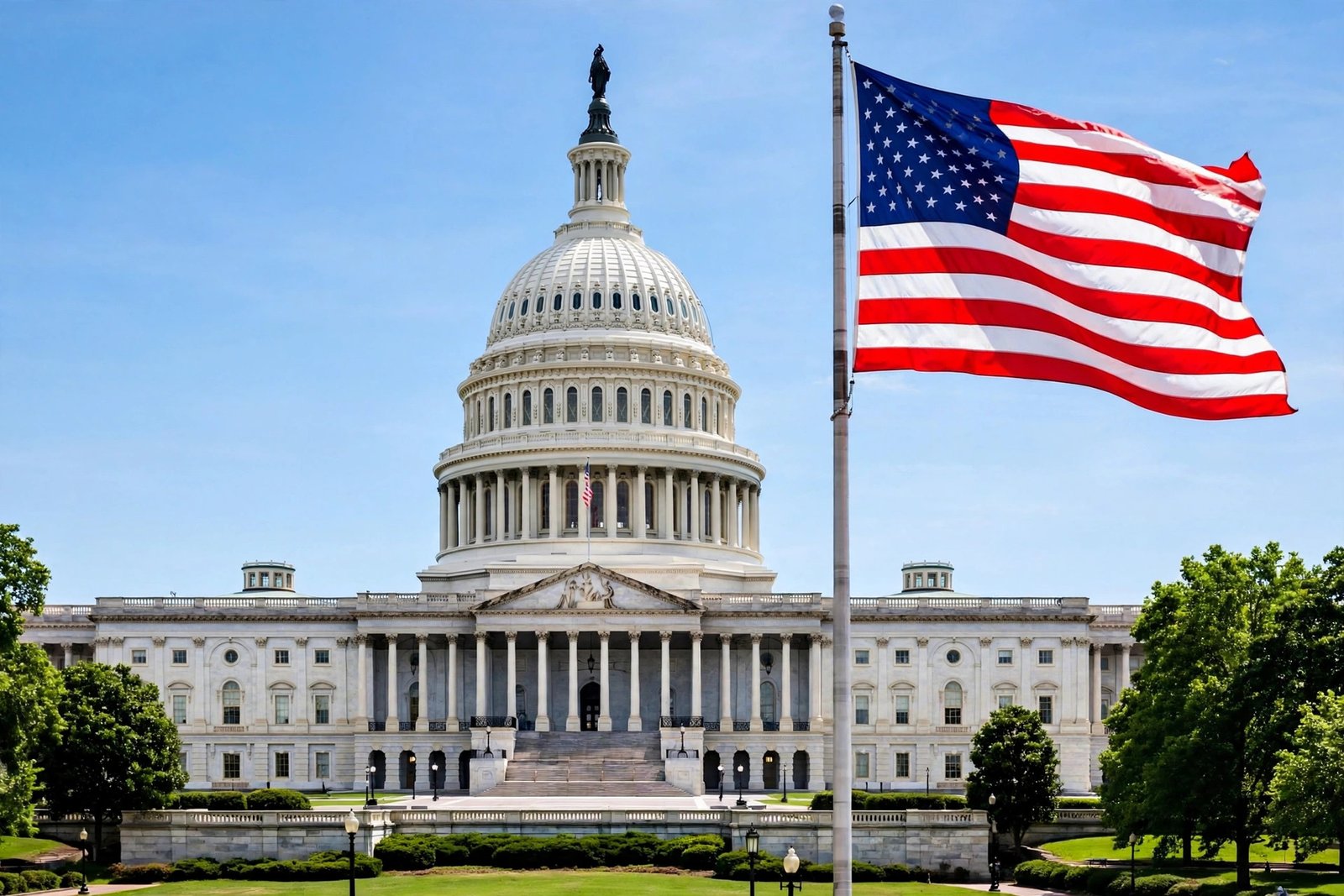
Every American schoolchild learns that the United States has 50 states, and every American flag carries 50 stars, one for each state. But the country did not start with 50 states, and it did not reach that number quickly. It took 172 years, from Delaware’s ratification of the Constitution on December 7, 1787, to Hawaii’s admission on August 21, 1959, for the Union to grow from 13 states to 50. Along the way, states joined in waves shaped by war, purchase, migration, and politics, and the order in which they joined still echoes today in nicknames, state quarters, and the flags that fly over state capitols. Here is how America got its 50 states, in the order they joined.
The story begins with the original 13 states, which were not admitted in the usual sense at all. These were the former British colonies that declared independence on July 4, 1776, united first under the Articles of Confederation, and then ratified the new Constitution between 1787 and 1790. Delaware was first, ratifying on December 7, 1787, which is why it is proudly known as the First State. Pennsylvania followed on December 12, New Jersey on December 18, and Georgia on January 2, 1788. Connecticut, Massachusetts, Maryland, South Carolina, and New Hampshire followed through the first half of 1788, and when New Hampshire ratified on June 21, 1788, the Constitution met the nine-state threshold needed to take effect. Virginia, New York, North Carolina, and Rhode Island completed the original 13 by May 1790, with Rhode Island the last to join the new federal government.
The first new states: Vermont and Kentucky
The first state admitted after the original 13 was Vermont, on March 4, 1791. Vermont’s path was unusual: it had operated as an independent republic for fourteen years, after breaking away from New York’s claims and governing itself. Its admission set a precedent that new states could be carved from territory and from existing states alike, with Congress’s approval. Kentucky followed on June 1, 1792, formed from the western counties of Virginia. Together, Vermont and Kentucky showed that the Union was designed to grow, and the Constitution gives Congress the power to admit new states, a power it has used 37 times since the original 13.
Tennessee joined on June 1, 1796, followed by Ohio on March 1, 1803, and Louisiana on April 30, 1812. Louisiana’s admission came just nine years after the Louisiana Purchase of 1803, in which the United States bought a vast territory from France, doubling the size of the nation overnight. That purchase set the stage for the next century of expansion, because it gave the young republic land that would eventually become all or part of fifteen states. Indiana joined in 1816, Mississippi in 1817, Illinois in 1818, Alabama in 1819, and Maine in 1820, the latter admitted as part of the Missouri Compromise, which paired Maine, a free state, with Missouri, admitted as a slave state in 1821.
Westward expansion and the politics of admission
For much of the 19th century, statehood was inseparable from the politics of slavery. Each new state shifted the balance of power in the Senate, where every state gets two senators regardless of population, so free states and slave states were often admitted in pairs to preserve the balance. Arkansas joined in 1836, Michigan in 1837, Florida and Texas in 1845, and Iowa in 1846. Texas was unique: it had been an independent republic after winning independence from Mexico, and it joined the Union by annexation, a path no other state has followed in quite the same way. Wisconsin joined in 1848, California in 1850 as part of the Compromise of 1850, and Minnesota in 1858, Oregon in 1859, and Kansas in 1861, the last admitted just before the Civil War tore the country apart.
The Civil War itself reshaped the map. West Virginia broke away from Virginia and joined the Union in 1863, the only state formed by splitting from a Confederate state during the war. Nevada joined in 1864, famously rushed to statehood in part so its votes and resources could support the Union cause. After the war, Nebraska joined in 1867, and Colorado in 1876, the Centennial State, admitted in the nation’s hundredth year. The pattern of admission reflected the nation’s growth: as settlers moved west along trails, railroads, and rivers, territories organized governments, wrote constitutions, and petitioned Congress for statehood.
The late 1880s brought a remarkable burst. In 1889 alone, four states joined: North Dakota, South Dakota, Montana, and Washington. North and South Dakota were admitted on the same day, November 2, 1889, and President Benjamin Harrison is said to have shuffled the proclamations so that no one would know which was signed first, a bit of presidential mischief that still fuels friendly rivalry between the Dakotas. Idaho and Wyoming followed in 1890, with Wyoming earning the nickname the Equality State for being the first state to grant women the vote. Utah joined in 1896, after decades of debate over its territorial government and practices.
The final stretch: Oklahoma to Hawaii
The 20th century completed the continental map. Oklahoma joined on November 16, 1907, formed from Oklahoma Territory and Indian Territory, and its admission closed the era of continental expansion. New Mexico joined on January 6, 1912, and Arizona followed on February 14, 1912, becoming the 48th state and the last of the contiguous states. For 47 years, the flag carried 48 stars, and generations of Americans grew up thinking of the country as complete.
Then, in 1959, the map changed twice in a single year. Alaska joined on January 3, 1959, as the 49th state, after decades as a territory purchased from Russia in 1867, a purchase critics once mocked as Seward’s Folly. Hawaii followed on August 21, 1959, as the 50th state, after a history that began as an independent kingdom, continued through annexation, and culminated in a statehood referendum in which voters overwhelmingly chose admission. The 50-star flag, designed after Hawaii’s admission, was first flown on July 4, 1960, and it has flown ever since, the longest-serving flag design in American history.
What about the places that are not states? The District of Columbia, Puerto Rico, Guam, the U.S. Virgin Islands, American Samoa, and the Northern Mariana Islands are all U.S. territories or districts, but none is a state, and their residents have different political rights. Puerto Rico has held several status referendums, and the District of Columbia has long sought statehood, but Congress has not admitted a 51st state. For now, the number remains 50, and each star on the flag represents a distinct history, from Delaware’s swift ratification to Hawaii’s long road to statehood.
Why the order still matters
The order of admission is more than trivia. It shaped the Senate, where small early states like Delaware and Rhode Island hold the same two votes as California and Texas. It shaped the flag, whose stars are arranged in rows that changed with each admission. It shaped state identities: Delaware’s First State nickname, Vermont’s independent spirit, Wyoming’s equality legacy, and Arizona’s Valentine’s Day birthday all trace back to admission dates. And it shaped the country’s geography, because states admitted later often have straighter borders, drawn by surveyors and Congress rather than by colonial charters and rivers.
For travelers, the order of admission is a ready-made road trip. Following the states in order, from Delaware’s historic towns to Hawaii’s volcanic shores, is a journey through American history itself: colonial ports, frontier forts, gold rush towns, prairie farms, desert cities, and Pacific islands. Each state joined for its own reasons, at its own moment, and each brought something distinct to the Union. Together, they form a country that is still, in a sense, an experiment in progress, a union of 50 very different places that chose, one by one, to stand together.
The statehood story also lives on in everyday objects. The 50 State Quarters program, which ran from 1999 to 2008, honored each state in the order it joined the Union, so a coin collection arranged by date tells the admission story in miniature. State flags, seals, and mottos carry the same history, and many state capitols display their admission dates proudly. For students, memorizing the order is a classic classroom exercise, but understanding why states joined when they did, and what each admission cost and promised, is the deeper lesson.
Frequently asked questions
What was the first state? Delaware, which ratified the U.S. Constitution on December 7, 1787, earning the nickname the First State.
What was the last state admitted? Hawaii, admitted on August 21, 1959, as the 50th state, a few months after Alaska became the 49th state on January 3, 1959.
How many states were original? Thirteen states ratified the Constitution between 1787 and 1790. The other 37 were admitted by Congress between 1791 and 1959.
Which state was admitted first after the original 13? Vermont, on March 4, 1791, after fourteen years as an independent republic.
Can new states still join? Yes. The Constitution allows Congress to admit new states, but no 51st state has been admitted since Hawaii in 1959.
Related reading
- Why America Has Six Time Zones, Explained
- The Gettysburg Address: Lincoln’s 272 Words That Remade America
- U.S. Money Facts: Coins, Ridges, and the Cost of a Penny
Sources: Congressional Research Service: Admission of States to the Union, States in order of admission.