
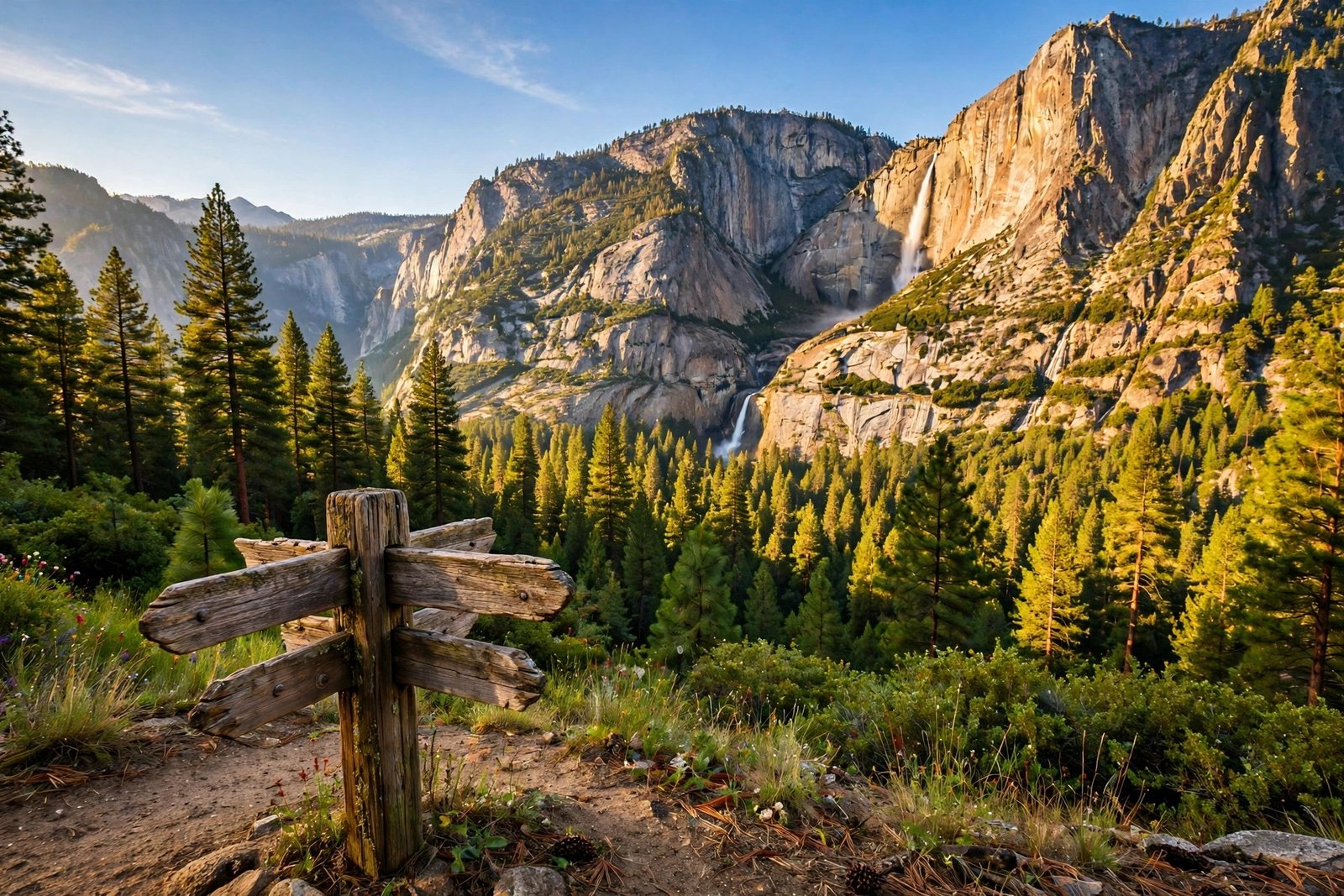
Ask a room full of travelers how many national parks America has, and you will hear a surprising range of answers. Some say around fifty. Others guess closer to a hundred. A few will confidently name a much larger number, because they are thinking of every site managed by the National Park Service. The true answer is refreshingly simple: the United States has 63 national parks. That number is official, current, and easy to remember once you understand what counts as a national park and what does not.
But the number 63 is only the beginning of the story. Behind it lies more than 150 years of American history, from a remote corner of Wyoming that became the world's first national park to a rugged river gorge in West Virginia that earned the newest spot on the list. The parks stretch from the Arctic reaches of Alaska to the tropical waters of Florida, covering deserts, forests, mountains, islands, and canyons. Together, they protect some of the most extraordinary landscapes on Earth, and they belong to every American.
Whether you are planning your first park trip or simply curious about how the system works, this guide explains the full 63-park story: how the count is decided, how it grew over time, which parks are the oldest and newest, and why the number may change again in the future.
The Short Answer: 63 National Parks
As of today, there are 63 places in the United States that carry the official title of national park. Each one was established by an act of Congress, and each is managed by the National Park Service, the federal agency charged with caring for these landscapes for the enjoyment of present and future generations. The National Park Service itself oversees many more places than just these 63, which is where much of the confusion comes from.
The full National Park System includes more than 400 individual units. That larger total covers national monuments, national historic sites, national recreation areas, national seashores, national battlefields, and many other designations. All of them are nationally significant, and all of them are cared for by the National Park Service, but only 63 hold the specific title of national park. When people ask how many national parks America has, 63 is the correct answer to that precise question.
The distinction matters because the title is not handed out casually. A national park is generally a large, natural area of outstanding scenic, scientific, or ecological value. Congress must act to create one, either by passing a law that establishes it directly or by redesignating an existing site, such as a national monument, with the higher title. That is why the list grows slowly, one park at a time, rather than changing every year.
What Counts as a National Park?
The difference between a national park and a national monument is one of the most common sources of confusion. Both are protected by the federal government, and both can be spectacular. The key difference is how they are created and what they are meant to protect.
A national monument is typically established by a presidential proclamation under the Antiquities Act of 1906, and it usually protects a specific feature, such as a historic structure, an archaeological site, or a remarkable geological formation. A national park, by contrast, is created by Congress and usually protects a much larger landscape, an entire ecosystem rather than a single landmark. Many of today's national parks began life as national monuments before Congress elevated them to full park status.
That path from monument to park is a familiar one. Grand Canyon, Zion, Olympic, and several other beloved parks all started as national monuments. The upgrade reflects a judgment that the place deserves the highest level of recognition and protection in the system, and it often brings more visitors, more funding, and more attention to conservation needs. Understanding this distinction also explains why lists of National Park Service sites and lists of national parks look so different: the first counts everything, while the second counts only the parks.
Yellowstone and the Birth of an Idea
The story of America's national parks begins in 1872, when President Ulysses S. Grant signed the law creating Yellowstone National Park. Yellowstone, which spans parts of Wyoming, Montana, and Idaho, became the first national park in the United States, and the first in the entire world. The idea was radical for its time: that a spectacular landscape should be set aside not for private profit or royal privilege, but as a public park for the benefit and enjoyment of the people.
Yellowstone's geothermal wonders helped make the case. Its geysers, hot springs, and bubbling mud pots were unlike anything most Americans had ever seen, and early explorers returned with stories and paintings that captured the public imagination. The park also protected dramatic canyons, waterfalls, forests, and wildlife, including herds of bison and elk that roamed its valleys. Setting it aside was a statement that some places are too valuable to be divided up and sold.
The Yellowstone model quickly spread. Other countries began creating their own national parks, borrowing the American idea that natural wonders deserve public protection. Within a few decades, parks were established across the American West, from the granite cliffs of Yosemite to the deep chasm of the Grand Canyon. Each new park added to a growing conviction that conservation and public enjoyment could go hand in hand.
The National Park Service Is Founded in 1916
By the early twentieth century, the parks existed but lacked a single agency to manage them. They were overseen by a patchwork of departments, and there was no consistent policy for protecting them or welcoming visitors. That changed in 1916, when President Woodrow Wilson signed the law creating the National Park Service. The agency's founding mission, written into the law, was to conserve the scenery, natural and historic objects, and wildlife in the parks, while also providing for their enjoyment by the public in a way that would leave them unimpaired for future generations.
That dual mission, conservation and enjoyment, remains the central tension and the central genius of the park system. Parks must be protected, but they must also be open to people. The National Park Service balances those goals every day, building trails and visitor centers while also guarding fragile ecosystems, restoring native species, and preserving historic structures. The agency's arrowhead logo, introduced decades later, symbolizes that mission, with its elements representing the plants, animals, scenery, and history the service protects.
The creation of the National Park Service gave the system a professional identity and a coherent purpose. It also set the stage for the great expansion of the parks in the decades that followed, as new landscapes were added and the idea of a national park became a cherished part of American identity. Today, the service manages all 63 national parks along with hundreds of other sites, from presidential homes to Civil War battlefields.
From Alaska to Florida: Parks Across America
One of the most remarkable things about the 63 national parks is their geographic range. They are not confined to one region or one kind of landscape. Alaska alone is home to eight national parks, including vast wilderness areas where mountains, glaciers, and tundra stretch beyond the horizon. At the opposite end of the country, Everglades National Park in Florida protects a slow-moving river of grass, a subtropical wetland ecosystem found nowhere else in the United States.
Between those extremes lies an astonishing variety. The desert parks of the Southwest, including Grand Canyon, Zion, Bryce Canyon, and Arches, showcase red rock canyons, towering spires, and some of the darkest night skies in the country. The parks of the Pacific coast, from Olympic in Washington to Channel Islands off California, protect rainforests, rugged shorelines, and island ecosystems. In the East, parks such as Shenandoah, Great Smoky Mountains, and Acadia preserve forested mountains, autumn color, and Atlantic coastline.
The parks also span islands and territories in spirit, though the official list of 63 covers the fifty states. American Samoa's National Park of American Samoa is the one national park located in a U.S. territory, protecting coral reefs, rainforest, and Samoan village life in the South Pacific. Its inclusion is a reminder that the park idea reaches well beyond the continental United States, and that America's natural heritage includes tropical as well as temperate landscapes.
The Newest Park: New River Gorge
The newest addition to the list is New River Gorge National Park and Preserve in West Virginia. The New River itself is one of the oldest rivers on the continent, cutting a deep gorge through the Appalachian Mountains over millions of years. The area had long been protected as a national river, prized by rafters, rock climbers, hikers, and anglers for its whitewater and its forested cliffs.
In late 2020, Congress redesignated the site as a national park, and the change took effect in 2021. New River Gorge became the 63rd national park, and the first in West Virginia. Its elevation was a moment of pride for the state and a recognition that the Appalachian landscape, with its biodiversity and its outdoor recreation, deserved a place alongside the great western parks. The park also preserves coal mining history and small river towns, weaving human stories into its natural scenery.
New River Gorge illustrates how the list grows: not by discovering new land, but by recognizing the national significance of a place that was already protected in another form. Its story also shows that the park system is not finished. As long as landscapes of outstanding value remain, Congress may one day add a 64th park, and the number that Americans memorize will change again.
Parks People Often Mistake for National Parks
If you have ever been surprised to learn that a famous place is not a national park, you are not alone. Several iconic American landscapes carry other titles, and they are easy to confuse with the 63. Monument Valley, for example, is a Navajo Tribal Park, managed by the Navajo Nation rather than the federal government. Its towering buttes are world-famous, but it has never been a national park.
Similarly, places such as the Grand Staircase-Escalante region in Utah and Devils Tower in Wyoming are national monuments, not national parks. Devils Tower holds the distinction of being the first national monument, proclaimed in 1906. It is a striking volcanic rock formation sacred to many Native peoples, and it draws climbers and sightseers from around the world, but its official designation remains national monument. The same is true of many beloved sites that are part of the National Park System without being national parks.
Why the Number Changes Over Time
The count of 63 has held steady since New River Gorge joined the list, but history shows that the number is not permanent. New parks are added only when Congress decides a place merits the title, and that process can take years of study, advocacy, and legislation. Some proposals circulate for decades before they succeed, while others never advance beyond the idea stage.
There is also the possibility that an existing national monument or national recreation area could be redesignated, just as New River Gorge was. Until Congress acts, however, the number stays at 63.
For travelers, the stable number is good news. It means a complete list is manageable, and the popular goal of visiting all 63 parks is a real, achievable challenge, even if it takes a lifetime. For conservationists, the slow growth reflects a deliberate standard: the title of national park is reserved for places of truly national significance, and that restraint is part of what makes the designation meaningful.
How to Explore the 63 Parks
There is no single right way to experience the national parks. Some visitors plan ambitious road trips, stringing together several parks in one region, while others return to a favorite park year after year, learning its trails and seasons in depth. The National Park Service website is the best starting point for planning, with official information on each park's hours, fees, campgrounds, trails, and current conditions. Because conditions can change with weather, wildfire, or maintenance, checking the official park pages before a trip is always wise.
It also helps to think in terms of regions and seasons. Desert parks are most comfortable in spring and autumn, northern parks shine in summer, and fall brings brilliant color to eastern parks. Matching a park to its best season can turn a good trip into an unforgettable one.
Above all, the parks reward patience and respect. Stay on marked trails, keep a safe distance from wildlife, carry out what you carry in, and remember that these landscapes are fragile even when they look rugged. The parks survived because earlier generations chose to protect them. The way visitors treat them today will determine whether they remain unimpaired for the generations to come.
Frequently Asked Questions
How many national parks are there in the United States?
There are 63 national parks in the United States. Each was established by Congress and is managed by the National Park Service. The broader National Park System contains more than 400 units in total, including national monuments, historic sites, and recreation areas, but only 63 carry the title of national park.
Which national park was the first?
Yellowstone National Park was the first, established in 1872. It was also the first national park in the world, and it created the model that other countries later followed. Yellowstone is known for its geysers, hot springs, canyons, waterfalls, and wildlife.
Which national park is the newest?
New River Gorge National Park and Preserve in West Virginia is the newest national park. Congress redesignated it in late 2020, and it became the 63rd national park in 2021. It protects a deep Appalachian river gorge prized for rafting, climbing, hiking, and fishing.
When was the National Park Service founded?
The National Park Service was founded in 1916. Its mission is to conserve the scenery, natural and historic objects, and wildlife of the parks while providing for public enjoyment in a way that leaves them unimpaired for future generations.
What is the difference between a national park and a national monument?
A national park is created by Congress and usually protects a large landscape or ecosystem. A national monument is typically established by presidential proclamation and usually protects a specific feature, such as a historic structure or geological formation. Many national parks began as national monuments before Congress elevated them.
Related Reading
- Channel Islands National Park: California's Hidden Gem Guide
- White Sands National Park: New Mexico's Gypsum Dunes
- How America Got 50 States: The Order States Joined
For official information on every park, including hours, fees, and current conditions, visit the National Park Service at nps.gov.