
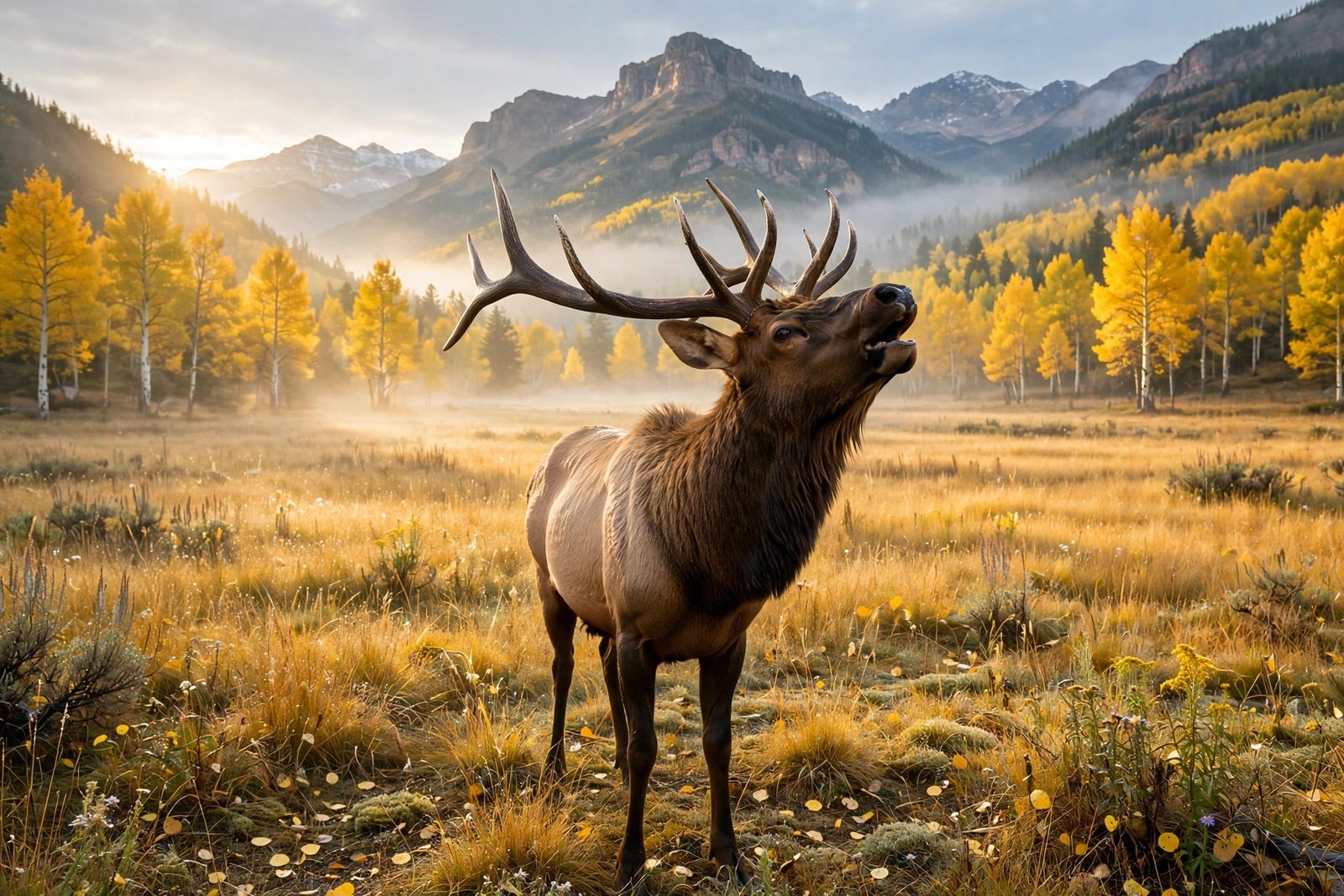
There is no sound in the American West quite like an elk bugling. It starts as a low grunt, rises into a high, clear whistle, and ends in a series of sharp grunts, echoing across a meadow at dawn. In Rocky Mountain National Park, that sound fills the valleys each autumn, when bull elk gather in lower meadows to compete for mates in the annual rut. It is one of the wildest, most thrilling wildlife spectacles in the national park system, and it is free to anyone willing to rise early and keep a respectful distance.
According to the National Park Service, the peak of the elk rut in Rocky Mountain National Park generally lasts from mid-September to mid-October, although it is often possible to hear elk bugling into November. The scene of tens to hundreds of elk in one location, flanked by mountain scenery and fall colors, is hard to resist, and the bugling adds a soundtrack unlike anything else in nature. November visitors may catch the tail end of the rut, with bugling still possible in the early part of the month, especially in the park’s lower meadows.
This guide explains the science of the rut, where to watch safely, and how to enjoy one of America’s great wildlife events without disturbing the animals that make it possible.
What Is the Elk Rut?
The rut is the elk mating season, a period of intense activity when bull elk compete for harems of cows. Bulls bugle to announce their presence, challenge rivals, and attract females. They display their antlers, posture aggressively, and sometimes clash antlers in dramatic sparring matches. Cows gather in groups, and the largest, strongest bulls defend those groups against challengers. The result is a weeks-long drama of sound, movement, and confrontation, played out in open meadows where visitors can watch.
Research conducted in Rocky Mountain National Park by Dr. Jennifer Clarke and her students at the University of Northern Colorado suggests that elk bugles carry a wide range of information. Some bugles simply announce that a bull is in the area with his harem. Others include grunts, which occur less frequently, in about 16 percent of calls, and may signal different intentions. Research by Dr. Joel Berger of the Wildlife Conservation Society suggests that elk bugle more often and for longer periods, and form larger aggregations, in Rocky Mountain National Park than in parks such as Yellowstone, where predators such as wolves and grizzly bears change elk behavior.
The rut is also a test of endurance. Bulls eat little during the rut, spending their energy on bugling, herding, and fighting, and they can lose a significant amount of body weight by the end of the season. Cows, meanwhile, choose mates based on the bulls’ displays and condition. The calves born the following spring are the result of this autumn competition, and their survival through winter depends on the fat reserves their mothers built during summer.
Where to Watch in Rocky Mountain National Park
The best rut viewing in Rocky Mountain National Park is in the large meadows on the east side of the park, particularly Moraine Park, Upper Beaver Meadows, and Horseshoe Park, all within a few minutes of each other near Estes Park. Kawuneeche Valley on the west side is another excellent location. These meadows offer open views, so visitors can watch from a distance without entering the animals’ space, and they are accessible by road, making them suitable for visitors of all mobility levels.
Dawn and dusk are the prime viewing times, when elk are most active and the light is most beautiful. Arrive early, park in designated areas, and use binoculars or a spotting scope for a closer look. The park sometimes closes portions of Moraine Park during peak rut hours or for resource protection, so follow posted signs and ranger instructions. If a meadow is closed, enjoy the view from the road or a designated viewpoint rather than entering a closed area.
Fall color adds to the experience. Aspens turn gold in September and early October, and meadow grasses turn golden brown, framing the elk in a landscape that looks painted. By November, much of the color has faded and higher roads may be closed for winter, but lower meadows can still hold elk, and the quieter crowds make for a more peaceful visit. Always check current park conditions before traveling, since weather and road status change quickly in the mountains.
How to Watch Safely and Respectfully
Safety is the most important part of rut viewing. Elk are large, wild animals, and bulls during the rut are aggressive and unpredictable. The National Park Service advises visitors to stay at least 75 feet, about two bus lengths, from elk, and to retreat farther if an animal changes its behavior because of your presence. Never approach an elk, never try to feed one, and never position yourself between a bull and his harem or between a cow and her calf.
Artificial calls and lights used to attract elk are prohibited in the park, and for good reason: imitating a bugle can provoke a bull to charge or disrupt the natural competition. Photographers should use a telephoto lens rather than moving closer, and everyone should keep voices low and movements slow. If an elk approaches you, move away calmly and give it space. The best photographs come from patience, not proximity.
Children should be kept close and supervised, and pets must be leashed and kept away from wildlife. Dogs can provoke elk and are a common cause of dangerous encounters. If you are camping in the park, store food properly and be aware that elk may wander through campgrounds, especially in Moraine Park, where fall campers are often serenaded by bugles echoing across the valley at night.
The Elk of Rocky Mountain National Park
Elk are among the largest land mammals in North America, with bulls weighing hundreds of pounds and carrying antlers that can span several feet. In Rocky Mountain National Park, elk move seasonally between high summer ranges and lower winter ranges, following food and snow conditions. In autumn, they gather in the lower meadows for the rut, and in winter they move to lower elevations outside the park as well as within it.
The park’s elk population is managed in cooperation with the state of Colorado, and the animals face challenges familiar to wildlife across the West: habitat fragmentation, disease, and the pressures of a changing climate. Visitors who follow viewing rules help directly, because stressed elk waste energy they need for winter, and disturbed harems can lead to fewer successful matings. Responsible viewing is not just polite; it is conservation.
Other wildlife shares the meadows during rut season. Mule deer, coyotes, and a variety of birds are common, and lucky visitors may spot a moose in Kawuneeche Valley or a bighorn sheep on a rocky slope. Each species has its own viewing distance and behavior, so the same rule applies to all: watch from afar, stay quiet, and let the animals be wild.
Planning a Rut Visit
For a rut visit, base yourself in Estes Park on the east side or Grand Lake on the west side. Both towns offer lodging, restaurants, and visitor services, and both provide access to the park. The east side, via Bear Lake Road, is the most popular for rut viewing, but it can be crowded in peak season, so arrive early and consider weekdays over weekends. Timed-entry reservations have applied in the park in recent years, so check the current system before you go.
Dress for mountain weather. Autumn mornings in the park can be near freezing, even when afternoons are mild, and weather can change quickly. Layers, a warm jacket, gloves, and sturdy shoes are essential, and a thermos of hot coffee makes dawn viewing much more pleasant. Bring binoculars, a camera with a zoom lens, and a field guide or app to identify birds and other wildlife you see along the way.
If you cannot visit during the rut, the park rewards visitors in every season. Winter brings snowshoeing and quiet trails, spring brings wildflowers and calving season, and summer brings alpine lakes and high trails. But for sheer drama, nothing matches an autumn morning in Moraine Park, when the mist lifts, the aspens glow, and a bull elk throws back his head and bugles across the valley.
Related Reading
- Prairie Dogs: Keystone Wildlife of the American West
- American Bison: A Comeback From Near Extinction
- How Many National Parks Does America Have? The 63 Explained
Frequently Asked Questions
Q: When is the elk rut in Rocky Mountain National Park?
The peak generally lasts from mid-September to mid-October, according to the National Park Service, although bugling can often be heard into November.
Q: Where is the best place to see the elk rut?
Moraine Park, Upper Beaver Meadows, and Horseshoe Park on the east side, and Kawuneeche Valley on the west side, are the best locations. Dawn and dusk are prime viewing times.
Q: How far should I stay from elk?
Stay at least 75 feet, about two bus lengths, from elk, and move farther away if your presence changes their behavior. Bulls during the rut are aggressive and unpredictable.
Q: Can I imitate an elk bugle to attract them?
No. Artificial calls and lights used to attract elk are prohibited in the park, because they can provoke bulls and disrupt natural behavior.
Q: Is November too late to hear elk bugling?
Not necessarily. The peak is earlier, but the Park Service notes that bugling can often be heard into November, especially in lower meadows.