
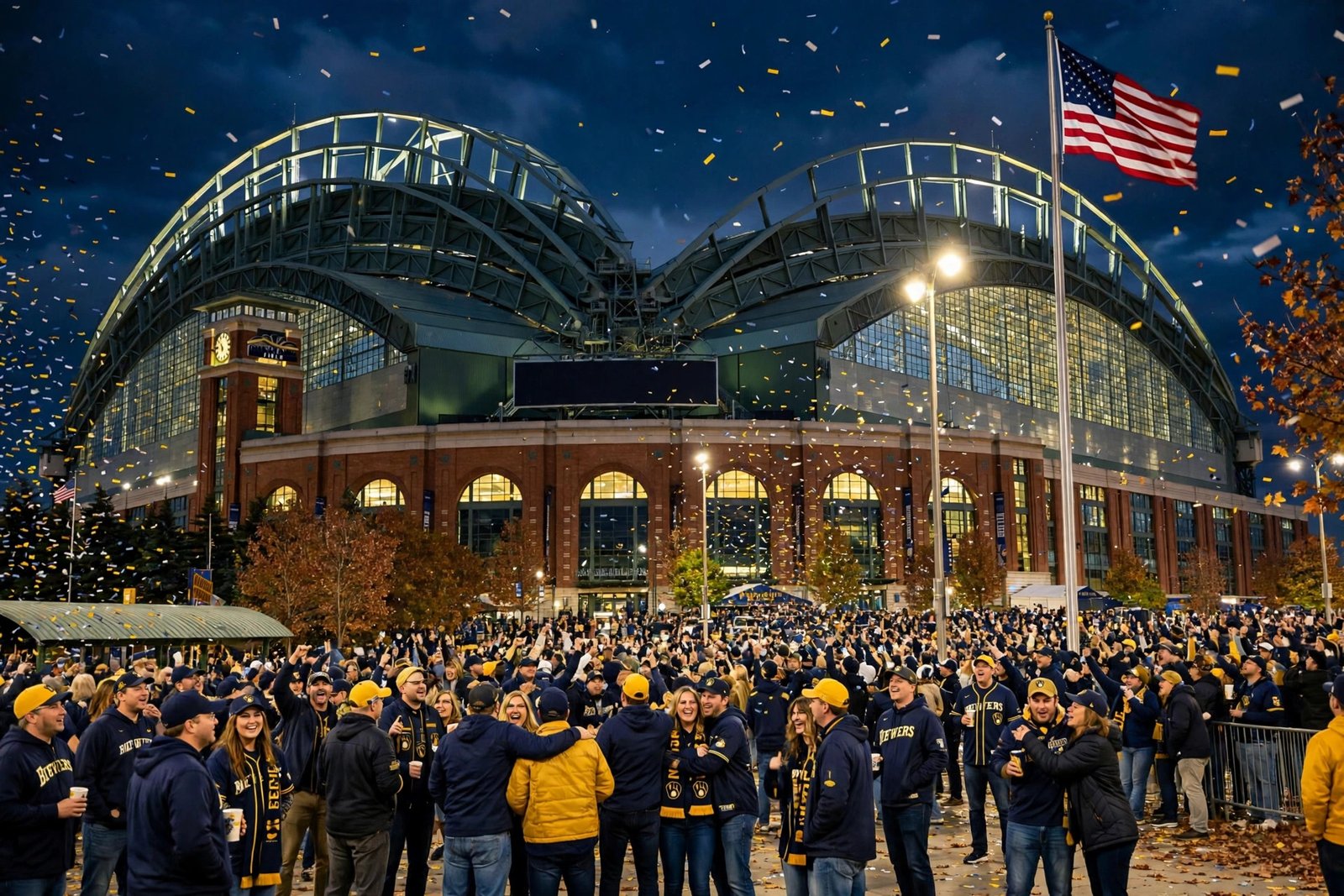
Every few years, baseball produces a World Series that reaches beyond baseball fans. The 2026 World Series was one of those. On one side stood the Milwaukee Brewers, back in the Fall Classic for the first time in 44 years, carrying the hopes of the smallest media market in Major League Baseball. On the other stood the Tampa Bay Rays, a franchise that had reached the Series twice before and lost twice. When the Series opened on Friday, October 23, at American Family Field in Milwaukee, one thing was guaranteed before a single pitch: a franchise that had never won a championship was about to win one.
That guarantee is rarer than it sounds, and it turned a late-October matchup between two modest-payroll teams into the most warmly followed Series in years. This is the story of how it came together — the 44-year wait, the revenge sweep that preceded it, and what the result means for two fan bases that had only ever watched other cities celebrate.
A wait that began in 1982
To understand Milwaukee’s October, you have to start with the franchise’s strange biography. The Brewers began life in 1969 as the Seattle Pilots, moved to Milwaukee in 1970, and reached the World Series exactly once before 2026 — in 1982, when they were still an American League team. That “Harvey’s Wallbangers” club pushed the St. Louis Cardinals to seven games and lost, squandering a 3-2 series lead and a late lead in Game 7 itself. The franchise switched to the National League in 1998 and then waited, and waited, through decades of near-misses — most recently a run of seven playoff appearances in eight years that kept ending one step short.
Before this Series, Milwaukee was one of only five active franchises that had never won a World Series, alongside the Rays, the San Diego Padres, the Colorado Rockies, and the Seattle Mariners — the only club on that list that has never even reached one. A concise history of the Brewers’ road between Fall Classics is in this NBC Sports explainer on Milwaukee’s World Series history.
The best team in baseball, built the hard way
The 2026 Brewers were not a Cinderella that stumbled into October. They won 103 games in the regular season — the best record in baseball and the first 100-win season in franchise history — and locked up the National League Central. They did it, as they have for years, without spending like the sport’s giants: a mid-pack payroll by league standards, and by some measures the 19th-ranked payroll in the game, in its smallest media market.
The postseason turned that résumé into a story. Milwaukee beat the San Diego Padres in four games in the Division Series. Then came the matchup every Brewers fan had circled: the Los Angeles Dodgers, the two-time defending champions who had swept Milwaukee in the 2025 National League Championship Series. This time the Brewers returned the sweep, in four games, clinching the pennant in Los Angeles. The clincher was pure 2026 Brewers: down 4-0 early after a Shohei Ohtani home run, they scored six unanswered runs to win 6-4. First baseman Jake Bauers was named NLCS MVP, hitting .286 with a home run and six RBIs in the series. Manager Pat Murphy’s postgame summary — that the Dodgers may have a bunch of Hall of Famers, but his team had a bunch of gamers, and the gamers won — became the Series’ unofficial slogan in Milwaukee.
The other dugout: Tampa Bay’s third try
If neutral fans leaned Milwaukee, it was not because Tampa Bay lacked a story of its own. The Rays, founded in 1998, reached the World Series in 2008 and 2020 and lost both times. Their 2026 path was the harder road in October: seeded first in the American League, they fell behind the Cleveland Guardians two games to one in the ALCS, then won the final three games to take the pennant. A Rays title would have been a vindication of the sport’s most famously frugal operation, a team that develops talent relentlessly and trades stars before their contracts peak. A Brewers title would be a vindication of patience and continuity. Neutral America, unusually, could not lose.
That is the cultural engine that powered this Series beyond the sports pages. Pre-Series coverage, like this USA Today look at the Brewers’ championship drought, kept returning to the same framing: whichever team won, a decades-long drought ended, a parade route got used for the first time, and a fan base raised on heartbreak got its night. In an era of repeat champions and super-team payrolls, a guaranteed first-time winner is the most democratic storyline baseball can offer.
Milwaukee in October: a city wearing its heart outside
The human texture of the week belonged to Milwaukee. Captain Christian Yelich, a Brewer since 2018 and the face of the franchise’s modern era, spoke throughout the postseason about a city that had waited a long, long time. Around him, the team’s identity was distinctly unglamorous and deeply local: relentless at-bats, aggressive baserunning, superb defense, and a bullpen that ended games in bunches. Ace Jacob Misiorowski, the National League Cy Young favorite, gave the club a genuine October headliner — a homegrown flamethrower on the mound for the biggest games in franchise history.
Merchandise told the story in miniature. The moment the pennant was clinched, National League Champions gear sold through in waves; by the time the Series opened at American Family Field on October 23, Milwaukee was a city dressed in navy and gold, with fans who had been children in 1982 bringing their own children to a World Series for the first time. Forty-four years is not just a drought statistic. It is most of a lifetime — long enough for the 1982 team to become grandparents’ folklore, retold precisely because it had never been repeated.
The verified result: the wait is over
And so to the outcome — reported here only because it is confirmed by multiple major outlets. On Wednesday, October 28, the Brewers beat the Rays 4-1 in Game 5 at Tropicana Field in St. Petersburg to win the Series four games to one, as Reuters reported in its account of the clincher. Misiorowski threw 5 2/3 shutout innings in the final game. Milwaukee scored in the second, fifth, and sixth innings — RBI singles from Cooper Pratt and David Hamilton, a run-scoring double from William Contreras — and Tampa Bay’s only run came in the ninth. It was the first championship in franchise history, dating to 1969, and it brought Milwaukee’s total to 114 wins across the regular season and postseason.
Yelich’s words afterward matched the week’s mood: the city had waited a long time, and the team was bringing the trophy back to it. For the Rays, the wait continues — three trips to the World Series, three losses — and they remain on the short list of franchises still searching, now alongside the Padres, Rockies, and Mariners. Milwaukee comes off that list forever.
A small market with an outsized lesson
There is an economics story inside the fairy tale, and front offices around the league noticed it. Milwaukee’s championship roster was not assembled by outbidding the Dodgers and Yankees for free agents; it was built on drafting, development, defense, and depth — a full roster of contributors rather than a top-heavy payroll. The Brewers’ league-best 103 wins came with a payroll ranked in the bottom half of the sport, and their postseason run went directly through the most expensive roster in baseball. For fans in other small and mid-sized markets — Kansas City, Cincinnati, Pittsburgh, Tampa Bay itself — Milwaukee’s October functioned as evidence that the gap is real but not destiny: a well-run organization can still draft, develop, and defend its way to the last game of the season.
It also mattered that the Brewers’ style was so watchable. This was not station-to-station baseball waiting for a three-run homer. Milwaukee pressured defenses with aggressive baserunning, took extra bases, caught everything, and turned games over to a deep bullpen. In a Series watched by plenty of casual fans drawn in by the drought storyline, the product on the field rewarded them — crisp, fast, team-first baseball from a club that visibly enjoyed playing together. Storylines bring the audience to the door; the games themselves decide whether they stay. In 2026, they stayed.
Why this Series will be remembered
Some World Series are remembered for a single swing. This one will be remembered for arithmetic: 44 years, 103 wins, the smallest market in the sport, a payroll in the league’s bottom half, and a four-game sweep of a dynasty-in-progress to get there. It was proof, delivered on the sport’s biggest stage, that the long way still works — draft, develop, defend, run the bases, and trust a bullpen.
More than that, it was a reminder of what a championship drought does to a place. Milwaukee did not just win a title in October 2026; it closed a story that had been open since 1982, in front of fans who had quite literally waited their whole lives. That is why America was hooked. Baseball is at its best when it is about a city and its patience — and this fall, patience finally won.