
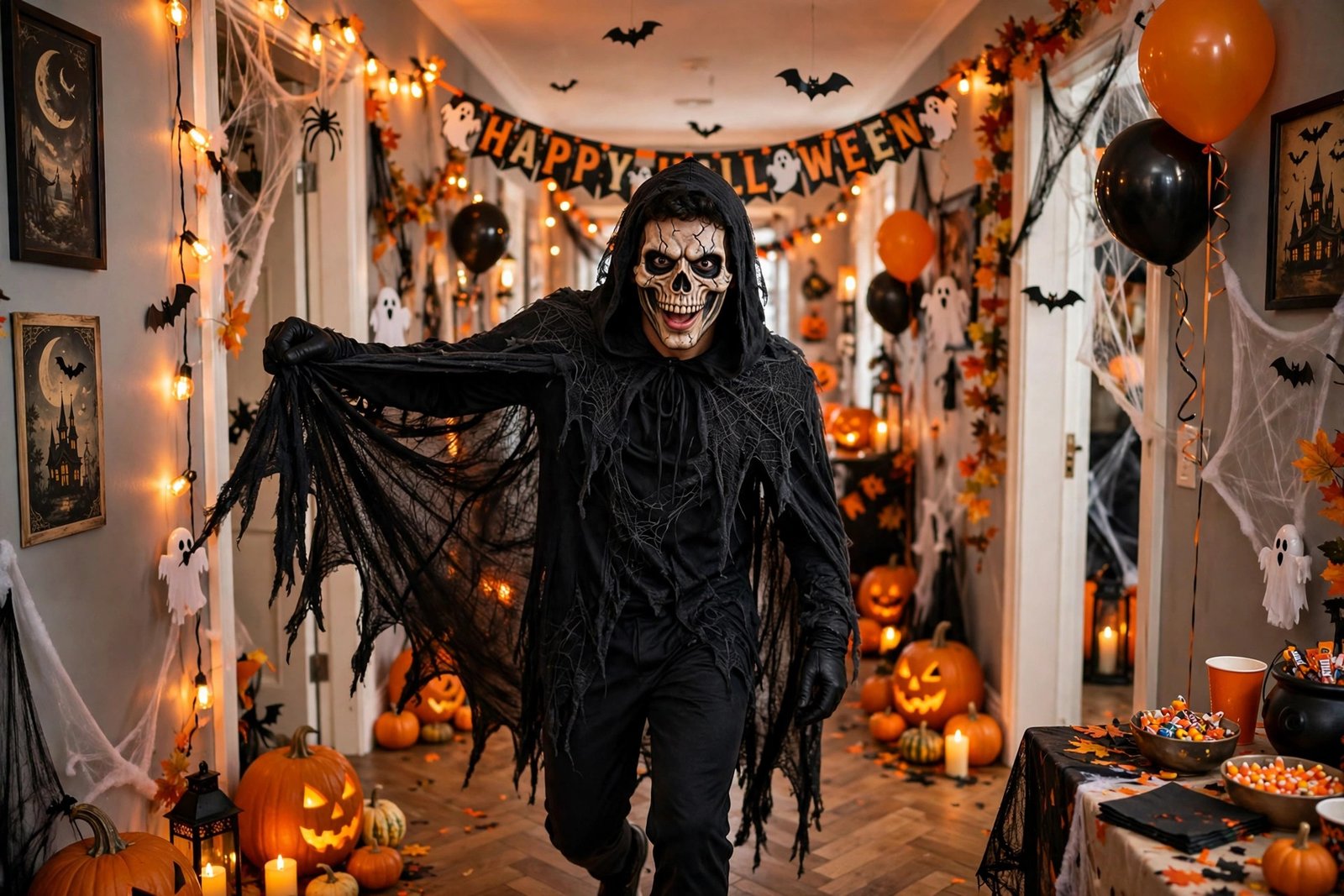
Halloween is tomorrow, and if your feed looks like a horror movie trailer, you are not imagining it. The Ramalama Costume Walk is back on TikTok for Halloween 2026, and it is the simplest scary video on the app: a low camera, a slow walk, a pair of shoes creeping toward the lens, and then, right on the beat, a full costume reveal. No talking, no on-screen text, no complicated edit. Just dread, timing, and a costume good enough to carry the payoff. If you still have a costume in the closet and a hallway at home, you still have time to film one tonight.
The format works because it borrows the oldest trick in horror movies. You do not show the monster right away. You show the footsteps. You let the viewer imagine what is coming, and then you deliver it all at once. That is why the walk keeps returning every October, and why it fits spooky season better than almost any other trend on the app. It is not about dancing skill or editing skill. It is about patience, a good pair of shoes, and a reveal worth waiting for.
What Is the Ramalama Costume Walk?
The Ramalama Costume Walk is a Halloween costume reveal filmed as a slow, low-angle walk toward the camera, set to Roisin Murphy’s song Ramalama (Bang Bang). The camera starts low, almost on the floor, framing only the creator’s legs and shoes. The creator walks slowly toward the lens, in time with the music, while viewers see feet, then knees, then more of the figure with every step. Some creators drag a prop behind them for extra dread. Then the camera pulls back or tilts up, and the full costume lands all at once: the outfit, the makeup, the character, the whole look.
That reveal is the entire point. Trend trackers describe the format as a returning favorite for Halloween, and New Engen’s October 2026 TikTok trend roundup names it alongside the Pumpkin Head Illusion as one of the season’s breakout formats. There is no talking and no text in the classic version, which is part of its charm. The silence makes the footsteps louder, the music stranger, and the reveal bigger. It also makes the trend unusually accessible: shy creators, small teams, and first-time posters can all film it without performing to the camera or writing a script.
The walk is not new. The song itself dates back to 2005, and the slow-walk format began appearing in the summer of 2025 before switching to Halloween costumes that October, when Murphy herself joined in. In October 2026, it has returned as a seasonal habit, climbing back into the week’s top trends just days before Halloween. That return is why so many roundups call it a classic rather than a one-off: it is the kind of format people expect to see every spooky season, like a costume they pull out of storage once a year.
The Song Behind the Scare
Ramalama (Bang Bang) is not a Halloween song at all, which is exactly why it works. Irish singer Roisin Murphy, formerly half of the duo Moloko, released it on her first solo album, Ruby Blue, in June 2005, working with producer Matthew Herbert, who built rhythms out of sampled everyday noises such as alarm clocks, a water cooler, hairspray, and helmets. The result is a track that sounds off-kilter and theatrical, with a chant-like vocal that feels like it belongs in a strange parade or a dream sequence.
On TikTok, the sound is easy to find by searching for the official track, Ramalama (Bang Bang) by Roisin Murphy, inside the app. Trend coverage in late October 2026 put the number of videos using the sound at roughly 430,000, with a fresh wave of costume clips landing in early October. That figure moves fast, and feeds move faster, so it is worth checking the sound in the app before you post, in case a newer remix or version is trending in your region. The core idea, though, stays the same: a slow, lurching beat that makes a simple walk feel like a scene from a horror film.
How to Film the Walk: Shoes, Hallway, and a Bat Prop
Filming the Ramalama Costume Walk is refreshingly low-tech. Start with the camera low, almost on the floor, in a hallway, stairwell, garage, or any narrow space that frames your legs and shoes without showing the full costume too early. Dim light helps, but you do not need a professional setup. A hallway at night, a porch light, or a single lamp in a dark room can all create the mood. The key is contrast: dark surroundings, a clear path toward the camera, and enough light on your shoes that viewers can follow each step.
Your shoes do a lot of the acting. Boots, platform shoes, claws, or any footwear that matches your character will read on camera before anything else does, so choose them deliberately and let the camera linger on them. Walk slowly, in time with the music, and keep your steps steady rather than rushed. The slow pace is what builds tension. If you hurry, the reveal arrives before the viewer has time to wonder what is coming, and the joke falls flat. Think of it as stalking the camera, not walking to it.
A prop can push the video from good to memorable. Many creators drag a bat prop behind them, letting it scrape or trail along the floor as they walk, which adds sound, movement, and a hint of story before the reveal. Other props work just as well, as long as they fit the character: a cloak edge, a staff, a lantern, or anything that trails, drags, or swings in time with the steps. Keep props safe and lightweight, film somewhere you have permission to record, and avoid anything sharp, heavy, or likely to trip you in a dark hallway. The scare should be on screen, not in real life.
When you are ready for the payoff, pull the camera back or tilt it up in one smooth move, so the full costume appears in a single beat. That is the moment to hold a pose and look straight into the lens. Let the music carry the reveal, and resist the urge to add text explaining the costume. Viewers love guessing, and the comments often fill with people naming the character before you ever say it. If you want to help them, put the character name in the caption after posting, not over the video itself.
Costumes That Work Best for the Walk
Almost any costume can work, but some translate better to a low-angle reveal than others. Horror-inspired costumes, creepy dolls, monsters, and cinematic villains are natural fits, because the slow walk already feels like a villain entrance. Witches, vampires, ghosts, skeletons, and ghost brides all benefit from the format, especially when the costume has a strong silhouette, a cape, a hat, or a dramatic hemline that only becomes clear when the camera pulls back.
Group versions work too. A trio in matching costumes, walking one after another toward the camera, turns a solo reveal into a small parade of dread. The classic example from last Halloween was a group dressed as the Sanderson sisters, whose coordinated walk landed because each reveal built on the last. If you film with friends, keep the same slow pace and the same low angle for each person, so the sequence feels like one continuous scene rather than three separate clips stitched together.
Why It Fits Spooky Season So Perfectly
The Ramalama walk fits Halloween for a reason that has little to do with the song and everything to do with how horror works. Horror movies rarely open with the monster in full view. They open with a sound, a shadow, or a pair of footsteps, and they let the audience’s imagination do the scary work. The walk copies that structure in fifteen seconds: shoes first, suspense second, monster last. Viewers who grew up on horror trailers recognize the rhythm instantly, even if they have never seen the trend before.
It also fits the way Americans actually celebrate Halloween. Costumes are the centerpiece of the holiday, whether you are trick-or-treating, heading to a party, or just showing off a look you spent weeks building. A format that exists only to show off a costume, without requiring dance moves or jokes, meets people where they already are. You do not need to be funny or talented on camera. You need a costume you love and a hallway to walk down. That low barrier is why the trend spreads so quickly every October, and why it keeps coming back.
Timing helps too. Halloween falls on Saturday, October 31, in 2026, which gives costume videos two nights of runway: the weekend itself, plus the days leading up to it when feeds are already full of spooky content. Posting a Ramalama walk on Halloween eve or Halloween day puts it right in the middle of that wave, when viewers are actively looking for costume ideas and Halloween inspiration. If you film tonight, you are not late. You are right on time.
Other Halloween 2026 TikTok Formats to Try
If the Ramalama walk is not your style, or if you want a second video for the same costume, the Pumpkin Head Illusion is the easiest Halloween format of the season. One person holds a real pumpkin close to the lens so it lines up over a friend’s head a few steps back. The friend then dances, spins, and flails while the pumpkin stays perfectly still, creating the illusion of a pumpkin-headed creature having the time of its life. It needs one prop and no editing, just forced perspective and a willing friend.
The trick is all in the setup. Hold the pumpkin by the stem near the camera, have your friend step back until the pumpkin covers their head, then hit record and let them go wild. Trend trackers note that golden hour, that warm late-afternoon light, makes the pumpkin glow, which is why so many versions are shot outdoors in fall light. The trending sound for many versions is a groovy, spooky remix built around a familiar line from Hocus Pocus, which gives every version the same recognizable start. The best takes lean into the contrast: a perfectly still gourd and a person flailing behind it.
Beyond those two breakout formats, October 2026 roundups also name half-face skull glam transitions, slow-motion squad walks, and cinematic witch or ghost-bride shorts as formats showing up across the For You page. A skull glam transition, where half the face transforms into skull makeup on the beat, rewards good makeup skill and a steady camera. A slow-motion squad walk, filmed with friends in matching costumes, turns a group entrance into a movie scene. A witch or ghost-bride short, shot cinematically with fog, candles, or a garden backdrop, leans into atmosphere over humor. Each format shares the same Halloween logic: show the costume, build the mood, and let the reveal do the work.
Tips for a Walk That Actually Lands
First, keep the camera steady. A shaky low shot distracts from the footsteps, so prop the phone on the floor, against a wall, or on a small tripod if you have one. Second, film more than one take. The first walk often feels too fast or too stiff, and the third or fourth usually finds the right pace. Third, watch the background. A cluttered hallway with laundry or boxes in view breaks the spell, while a clean, dark corridor keeps the focus on your shoes and your reveal.
Fourth, think about sound. The official track matters, because TikTok groups trend videos by sound, and using the trending audio helps your video show up alongside other Ramalama walks. If you are posting as a business account, check whether licensed songs are available to you, since some commercial accounts face restrictions on popular music. Personal accounts generally have the widest access, but the rules vary by account type and region, so a quick check in the app saves frustration later.
Finally, keep it safe and kind. Film in a place where you have permission, keep walkways clear, and avoid scaring strangers or blocking a shared hallway. The best Ramalama walks feel spooky on screen and completely ordinary behind the scenes: a friend holding a phone low to the floor, a costume you love, and a few quiet minutes in a hallway before the party starts. For more on the season’s trends, see New Engen’s Halloween TikTok and Reels trends roundup, Dromana’s guide to making each Halloween trend, and TLinky’s overview of TikTok Halloween trends for 2026.
Frequently Asked Questions
What song is used in the Ramalama Costume Walk?
Roisin Murphy’s Ramalama (Bang Bang), from her first solo album Ruby Blue, released in June 2005. Search for the official sound inside TikTok before posting, since remixes and versions can change quickly.
Do I need a fancy camera or editing app to film it?
No. A phone on the floor in a hallway is enough. The classic version has no talking, no text, and no complicated edit. A steady camera, slow steps, and a good costume carry the whole video.
What is the Pumpkin Head Illusion?
One person holds a real pumpkin close to the lens so it covers a friend’s head a few steps back, while the friend dances behind it. It uses forced perspective, one prop, and no editing, and it is one of the breakout Halloween formats of October 2026.
When should I post my Halloween TikTok?
Halloween falls on Saturday, October 31, 2026, so posting on Halloween eve or Halloween day puts your video in the middle of the spooky-season wave, when viewers are actively looking for costume ideas.
Can a group do the Ramalama walk together?
Yes. Film each person walking toward the camera at the same slow pace and low angle, so the reveals build on each other like a small parade. Matching costumes, such as a trio in coordinated looks, work especially well.
Related reading
More American trends and Halloween culture to explore: The Two Fishes TikTok Trend, Explained, Spirit Halloween 2026: Pop-Up Stores Across America, and Porchfest and Porch Culture in America.