
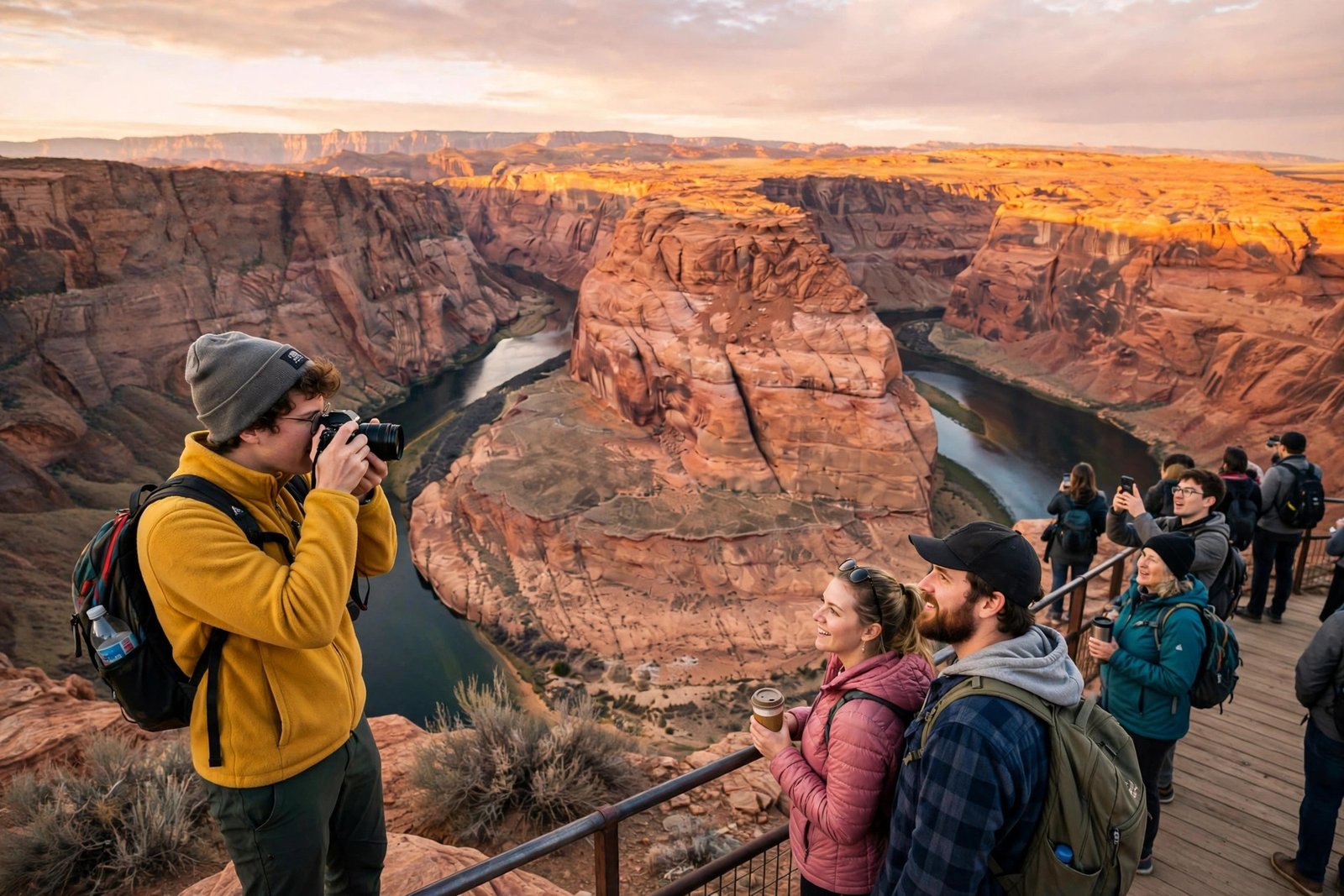
A single video can change a place. A waterfall that was once a local secret becomes a line of tripods. A quiet trailhead fills with cars before sunrise. A viewpoint that saw a handful of hikers a day suddenly sees hundreds. Across America, national parks are feeling the power of viral social media, as TikTok and Instagram turn scenic spots into overnight destinations, and the parks, the towns around them, and the visitors themselves are all adjusting to a new reality.
The numbers tell the story. In 2024, National Park Service sites recorded 331,863,858 visits, a record, up by 6.36 million from 2023 and about a million more than the previous record set in 2016. Great Smoky Mountains, Grand Canyon, Yellowstone, and Yosemite remain among the most visited parks, and gateway communities feel the surge in hotels, restaurants, and traffic. Social media is not the only reason visitation is high, but research published in the Proceedings of the National Academy of Sciences found that parks with greater social media exposure saw visitation increases 16 to 22 percent larger than parks with less exposure. A viral post, in other words, has a measurable effect.
This article explores how viral fame is reshaping America’s national parks, what it means for nature, for visitors, and for the small towns that welcome them, and how to visit responsibly in the age of the algorithm.
How a Park Goes Viral
It usually starts with a single striking image: a waterfall glowing in golden light, a lake so blue it looks edited, a trail that leads to a perfect viewpoint. A creator posts it, the algorithm picks it up, and within days millions of people have seen a place they had never heard of. The next weekend, the parking lot is full. The following month, a local news story notes the crowds. Within a season, the place has a new identity, not as a hidden gem but as a viral destination.
The pattern has repeated across the system. Horseshoe Bend near Page, Arizona, once a quiet overlook, now draws busloads of visitors daily. Trails in Joshua Tree, Zion, and Bryce Canyon have seen surges after viral posts. Even parks that were already popular feel the effect, as social media directs visitors to specific viewpoints, waterfalls, and photo spots, concentrating crowds in a few places rather than spreading them across a park’s vast acreage.
The speed is the new part. In the past, a place became famous slowly, through guidebooks, word of mouth, and magazine features. Today, fame can arrive in a weekend, faster than a park can add parking, restrooms, or rangers. That mismatch, between viral speed and park infrastructure, is at the heart of the overtourism debate.
What Crowds Do to Fragile Places
Crowds, in themselves, are not the problem. Parks exist for people to enjoy. The problem is concentration and behavior: too many people in too small an area, at the same time, doing things that damage the landscape. Vegetation gets trampled beside trails, social trails branch off into fragile areas, litter accumulates, and wildlife is disturbed. In Joshua Tree’s Rattlesnake Canyon, graffiti appeared on rocks after social media attention, and within months the canyon was closed, with reports blaming copycat vandalism inspired by online posts.
Wildlife suffers too. Animals that are approached too closely waste energy fleeing, abandon feeding areas, or become habituated to humans and food, which rarely ends well for the animal. The Park Service advises visitors to stay 25 yards from most wildlife and a full football field’s distance from bears and wolves, yet viral videos of close encounters continue to circulate, encouraging imitation. Each viral “touron” video, a nickname for tourists behaving badly in parks, is both a symptom and a cause, showing behavior that others then copy.
Popular trails illustrate the strain. On Yosemite’s Half Dome cables route, the Park Service has noted that high use can cause vegetation damage, erosion, impacts to animals, and litter, and that during peak periods of unregulated use, as many as 131 people were on the cables at once, while visitors preferred about 10 to 30 at a time. The permit lottery now in place for Half Dome is a direct response to that pressure, and similar systems have spread to other popular hikes, including Angels Landing in Zion, where a permit lottery began in 2022.
How Parks Are Responding
Parks are not standing still. Timed-entry reservation systems, now used at a growing number of parks, spread visitation across the day and the season, reducing the worst crowding. Permit lotteries for popular hikes limit numbers on fragile trails. The Park Service’s “Plan Like a Park Ranger” initiative educates visitors about safety, etiquette, and conservation, and the Leave No Trace organization has updated its guidance to include thoughtful social media use, asking creators to consider the impact of sharing precise locations.
Some destinations have gone further. The Jackson Hole Travel and Tourism Board launched a campaign asking visitors to stop geotagging specific locations in Wyoming’s parks, after increased traffic damaged habitats. Other places encourage visitors to tag the park or the region rather than the exact viewpoint, a compromise that lets people share their experience without sending a crowd to a single fragile spot. Creators, too, are increasingly aware of the issue, and many now delay posts, omit precise directions, or pair a beautiful photo with a conservation message.
Fees and funding are part of the picture as well. In 2026, the Park Service introduced a $100 per-person surcharge for non-U.S. residents ages 16 and older at national parks, on top of standard entrance fees, a change that has sparked debate about access and funding. Parks retain 80 percent of the entrance fees they collect under federal law, and those funds support maintenance, staffing, and visitor services, but the system still struggles to keep pace with record visitation.
What Viral Fame Means for Gateway Towns
For towns near parks, viral fame is a mixed blessing. Visitors spend money: in 2024, national park visitors spent roughly $29 billion in gateway communities on hotels, meals, tours, and supplies, according to park-related economic data. Great Smoky Mountains alone generates an estimated $2 billion annually in visitor spending, with hundreds of millions at Grand Canyon and Grand Teton. For small towns, that spending supports jobs, businesses, and tax revenue that would not otherwise exist.
The strain is real too. Traffic clogs main streets, housing for workers becomes scarce and expensive, and infrastructure built for a small town struggles with a seasonal flood of visitors. In Estes Park, gateway to Rocky Mountain National Park, locals work to balance welcoming visitors, more than 4.1 million in 2025 for that park, with protecting the community and the park they love. The same tension plays out in Springdale near Zion, in Tusayan near the Grand Canyon, and in dozens of other gateway towns.
The most successful towns are those that plan for tourism rather than merely reacting to it: investing in transit, workforce housing, and visitor education, and working with parks on joint solutions. Visitors can help by staying in locally owned lodgings, eating at local restaurants, and respecting quiet hours and residential neighborhoods, remembering that a gateway town is a home, not just a base camp.
How to Visit a Viral Park Responsibly
Visiting responsibly starts with planning. Check the park’s website for reservations, permits, and current conditions before you go. Arrive early or late to avoid peak crowds, and consider visiting on weekdays or in the shoulder season, when the same viewpoint can feel like a different place. Choose a less popular trail or area if your first choice is crowded; the park is vast, and the second-best viewpoint is often nearly empty.
On the trail, stay on marked paths, pack out everything you bring in, and keep your distance from wildlife. Do not stack rocks, carve trees, or leave painted rocks or other markers, all of which damage the landscape and encourage imitation. If you post about your visit, consider tagging the park rather than the exact location, and share a Leave No Trace tip along with your photo. The goal is not to stop sharing, but to share thoughtfully.
Finally, be patient with rangers and staff, who are managing record crowds with limited resources. A kind word, a followed rule, and a willingness to adapt your plan when a trail is full all make their work easier and your visit better. The parks belong to all of us, and keeping them beautiful is a shared responsibility, one viral post at a time.
Related Reading
- How Many National Parks Does America Have? The 63 Explained
- Elk Rut in Rocky Mountain National Park: A Bugling Guide
- Great Sand Dunes National Park: Colorado’s Hidden Gem
Frequently Asked Questions
Q: How many people visited national parks in 2024?
National Park Service sites recorded 331,863,858 visits in 2024, a record, up 6.36 million from 2023.
Q: Does social media really increase park visitation?
Research in the Proceedings of the National Academy of Sciences found that parks with greater social media exposure saw visitation increases 16 to 22 percent larger than parks with less exposure.
Q: What is geotagging, and why does it matter?
Geotagging adds a precise location to a photo or post. Sharing an exact viewpoint can send crowds to a fragile spot, so conservation groups encourage tagging the park or region instead.
Q: What permits do I need for popular hikes?
It depends on the park. Trails such as Half Dome in Yosemite and Angels Landing in Zion use permit lotteries. Always check the park’s official website before your visit.
Q: How can I help protect parks when I visit?
Stay on trails, pack out trash, keep distance from wildlife, visit at off-peak times, and share locations thoughtfully on social media.