
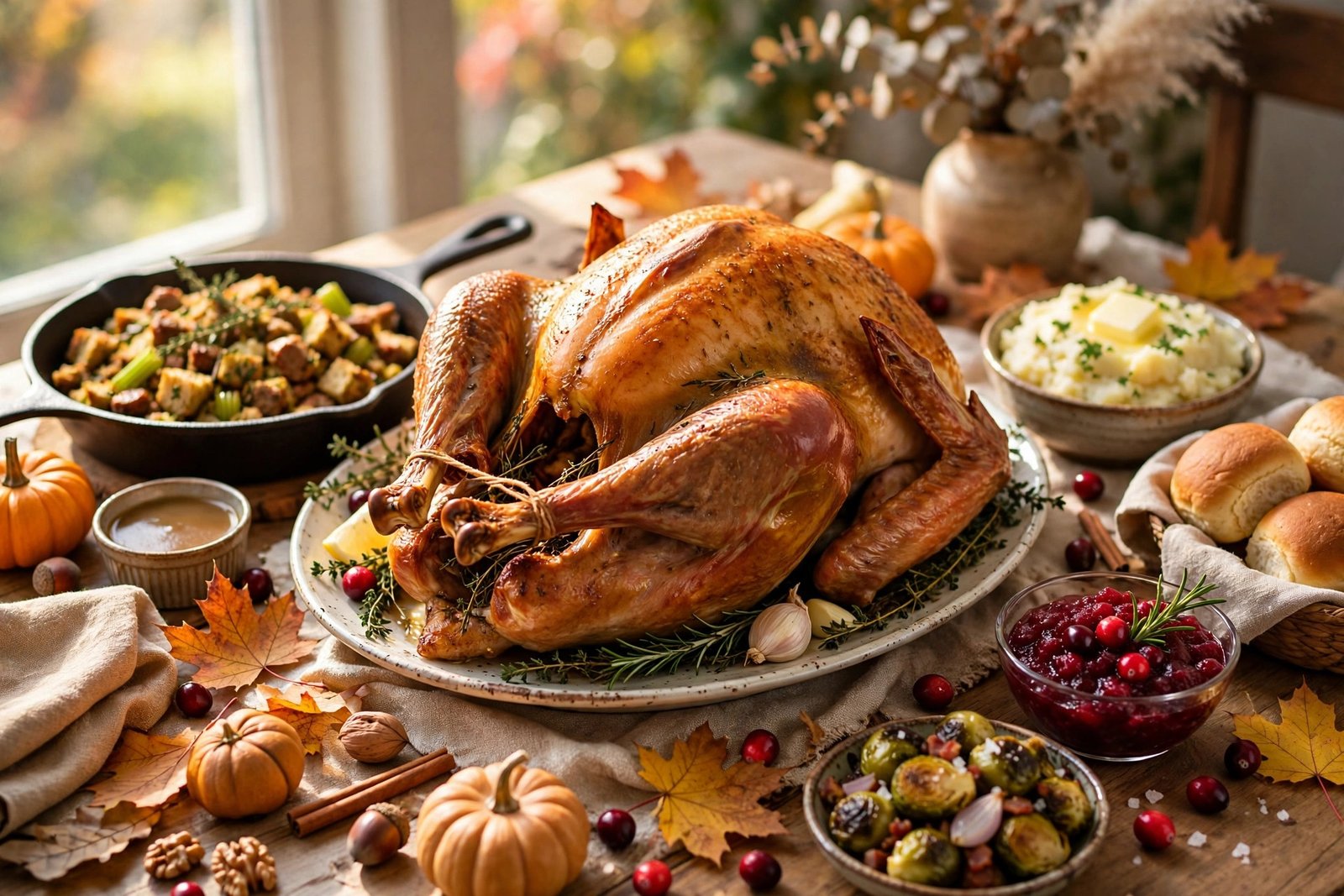
Thanksgiving is just a few weeks away, and for millions of American families, one question is already hanging over the holiday: how much is the turkey going to cost this year? Thanksgiving 2026 falls on Thursday, November 26, and the early signals suggest the centerpiece of the holiday table will cost a little more than it did last year — though probably not by as much as the wholesale numbers might make you fear.
The Short Answer: What Turkey Will Cost in 2026
If you want the bottom line first, here it is. In late October and early November 2026, grocery stores across the country were advertising frozen whole turkeys at a national weighted average of about $1.26 a pound, according to the U.S. Department of Agriculture’s weekly survey of grocery store ads, which covered more than 3,000 stores. That is up from about $1.03 a pound at the same point a year ago — a noticeable increase, but a far cry from the runaway prices some shoppers feared when wholesale markets spiked earlier in the year.
At that advertised price, a typical 16-pound bird — the size the American Farm Bureau Federation uses as its benchmark — would cost roughly $20 before any store promotion or minimum-purchase deal. Many stores will sell it for less. Grocery chains have a long tradition of treating the Thanksgiving turkey as a loss leader, pricing the bird at or below cost to lure shoppers through the door for everything else on the list.
Consulting firm PwC, in a holiday outlook released in mid-October, forecast that the average American family’s Thanksgiving dinner would cost about $90 this year, up from $88 in 2025, with turkey costing nearly 8 percent more than a year ago. That forecast is a projection, not a measurement, and it does not specify how many people the average family includes.
Why the Official 2026 Survey Is Not Out Yet
Every November, the most widely quoted number in Thanksgiving economics comes from the American Farm Bureau Federation, which has priced the same classic holiday menu every year since 1986. Volunteer shoppers check prices in stores during the first week of November, and the results are usually published the week before Thanksgiving — which means the 2026 edition is expected around the week of November 16, and had not been published as of early November.
Until it lands, the most recent official benchmark is the 2025 survey, and it is worth knowing in detail because it is the baseline every 2026 comparison will be measured against. In 2025, the Farm Bureau’s classic dinner for 10 people — a 16-pound turkey, stuffing, sweet potatoes, dinner rolls, peas, fresh cranberries, a vegetable tray, pumpkin pie with whipped cream, and milk — cost $55.18, or about $5.52 per person. That was down 5 percent from $58.08 in 2024.
The turkey itself was the biggest reason for the drop. The 2025 survey priced a 16-pound frozen turkey at $21.50, or $1.34 a pound — down 16.3 percent from the year before. The Farm Bureau credited grocers with running aggressive holiday deals to rebuild demand, and noted that farmers were still recovering from avian influenza outbreaks that had squeezed supplies. For context, the same dinner hit a record $64.05 in 2022, when inflation was running hot across the whole grocery store.
The 2025 survey also priced an expanded menu. Adding boneless ham, russet potatoes, and frozen green beans raised the total to $77.09 for 10 people.
What USDA Wholesale Prices Are Saying
The wholesale market tells a more expensive story than the grocery aisle does — and that is exactly why shoppers should pay attention to both. The U.S. Department of Agriculture’s Economic Research Service, in its October 2026 Livestock, Dairy, and Poultry Outlook, forecast that frozen whole hen turkeys would average about 175 cents a pound wholesale in the final three months of 2026, roughly in line with the 172 cents reported for the same stretch of 2025. But the annual average for 2026 is expected to come in at about 175.5 cents a pound, compared with 135.8 cents in 2025 — roughly 29 percent higher.
Weekly market prices have been running hot all autumn. USDA data showed bids for frozen whole hens averaging 184.0 cents a pound in the week ending October 2. The department has pointed to tight supplies of whole birds as the reason prices are elevated.
Here is the important part, though: there is no turkey shortage. The same October USDA outlook actually raised its 2026 turkey production forecast by 35 million pounds, to 5,134 million pounds, up from 4,844 million pounds produced in 2025. More birds are being raised this year, not fewer. Avian influenza has caused fresh losses in some turkey flocks in recent weeks, but USDA has not linked any retail price increase to those specific outbreaks, and weekly wholesale prices were steady in late October. The high prices reflect strong demand and tight supplies of the whole birds families want for the holiday, not an empty pipeline.
What Shoppers Are Actually Seeing in Stores
Wholesale prices are what grocers pay suppliers. Shelf prices are something else entirely, shaped by promotions, contracts signed months earlier, and the fierce competition for your Thanksgiving basket. That is why the advertised price in early November — about $1.26 a pound nationally — is well below the wholesale price of about $1.80 a pound. Stores are absorbing the difference, at least on the bird itself, because they know a cheap turkey brings in a full cart.
The USDA’s weekly grocery feature report for late October found about 2,500 stores nationwide advertising frozen conventional whole birds, more than at the same point last year, which suggests competition for turkey shoppers is intense.
Expect the deals to get sharper as Thanksgiving approaches. The deepest discounts typically appear in the final week or two before the holiday, when stores compete head-to-head on the bird and use minimum-purchase requirements to make sure the loss leader does its job.
The Whole Meal: What Thanksgiving Dinner Costs in 2026
The turkey is the star, but it is only part of the bill. The Farm Bureau’s classic menu runs to more than a dozen items, and the price of the whole meal is what most families actually feel. In 2025, the turkey accounted for about $21.50 of the $55.18 total — roughly 39 percent of the bill. The rest went to the sides and desserts that turn a roast bird into a feast.
For 2026, the early indicators point to a modest increase in the total. PwC’s forecast of about $90 for the average family dinner, up from $88, suggests the overall meal will cost a few dollars more than last year. The USDA’s Food Price Outlook forecast food-at-home prices up 2.4 percent for the year, and retail poultry up only about 1.0 percent.
One bright spot on the table: eggs. The USDA’s fall wholesale forecast for eggs was about $1.20 a dozen, down from $1.92 a year earlier — good news for anyone baking pies and making stuffing from scratch.
Fresh vs. Frozen: Which Bird Saves You Money?
One of the first decisions at the meat counter is fresh versus frozen, and the price difference is real. Frozen turkeys are almost always cheaper per pound than fresh ones, and they are the birds behind the big advertised loss-leader prices. A frozen bird also gives you flexibility: you can buy it weeks ahead when the price is right and thaw it on your own schedule.
Fresh turkeys cost more because they have a short shelf life and a more expensive supply chain — they must be kept chilled, never frozen, from processing to your kitchen, and stores can only stock them close to the holiday. What you get for the premium is convenience: no thawing time.
The USDA’s advice is to buy a fresh turkey only one to two days before cooking. A frozen turkey, by contrast, can be bought months in advance and kept in the freezer. If saving money is the priority, frozen is the clear winner — and it is the bird most American families buy.
How to Save on Your Thanksgiving Turkey
The strategies that work every year work this year, too, and a little planning can easily shave several dollars off the bird and the meal around it.
Buy early and watch the ads. Start checking your store’s weekly circular in early November. When a frozen turkey drops to a price you like, buy it — it will keep in the freezer until the holiday. The USDA’s weekly grocery feature reports show advertised prices moving week to week, and the best price of the season is rarely the one in the final days before Thanksgiving, when the cheapest birds may already be picked over.
Look for minimum-purchase deals. Many chains offer a turkey at a steep discount, or even free, when you spend a set amount on other groceries. If you are buying the rest of the meal anyway, the threshold may cost you nothing extra — but do the math first, and do not buy things you do not need just to hit it.
Consider the store brand. Store-brand frozen turkeys are typically the cheapest birds in the case, and they are raised and processed to the same federal safety standards as the name brands. The main differences are usually in added flavorings or brining solutions, not in the quality of the meat itself.
Size the bird to the table. The USDA’s rule of thumb is about one pound of uncooked whole turkey per person, or about a pound and a half per person if you want generous leftovers. A 16-pound bird feeds 10 comfortably with leftovers; a table of six does not need a 20-pounder. Buying the right size is the simplest saving of all, because every extra pound is money spent on meat nobody eats.
Think about a smaller bird or a different cut. If your gathering is small, a turkey breast or a bone-in breast roast can cost less in total than a whole bird and cooks faster.
When to Buy and When to Thaw
Timing matters as much as price. A frozen turkey needs time to thaw safely in the refrigerator — the USDA recommends allowing about 24 hours for every 4 to 5 pounds, in a refrigerator set at 40 degrees Fahrenheit or below. That means a 16-pound bird needs about four days, and a 20-pound bird needs four to five. Count backward from Thursday, November 26: a 16-pound turkey should move from the freezer to the fridge around Sunday, November 22, and a bigger bird should start thawing on Saturday.
Once thawed, the turkey can stay in the refrigerator for another one to two days before cooking, so starting a day early costs you nothing. If you are behind schedule, the USDA recognizes two other safe methods: thawing in cold water, at about 30 minutes per pound with the water changed every 30 minutes, and cooking the bird straight from frozen, which takes at least 50 percent longer than roasting a thawed turkey.
Cook the turkey to a safe internal temperature of 165 degrees Fahrenheit, measured with a food thermometer in the innermost part of the thigh and wing and the thickest part of the breast.
What If Prices Keep Climbing?
There is a real chance that the final numbers, when the Farm Bureau survey lands in the week before Thanksgiving, show a somewhat higher dinner than last year’s $55.18. Wholesale prices are up sharply year over year, and some of that pressure will eventually reach the shelf, even if promotions mask it for now. But the structure of the Thanksgiving market works in the shopper’s favor: stores compete fiercely on the bird, supply is up, and there is no shortage.
If your budget is tight, the most powerful lever is not the turkey at all — it is the menu around it. The sides, desserts, and drinks make up more than half the cost of the classic dinner, and they are where simple swaps save real money: store-brand canned pumpkin instead of name-brand, homemade cranberry sauce from a bag of fresh cranberries, and a potluck approach where guests bring a dish each.
The other lever is expectations. Thanksgiving dinner for 10 cost $55.18 in the Farm Bureau’s 2025 survey — about $5.52 a person. Even if 2026 comes in a few dollars higher, a home-cooked Thanksgiving remains one of the cheapest feasts in American life, especially next to the ready-made alternatives: restaurant and caterer meals for the same crowd can run several times the price of cooking at home. The turkey may cost a little more this year, but the holiday itself is still a bargain.
Frequently Asked Questions
How much will a Thanksgiving turkey cost in 2026?
In early November 2026, grocery stores were advertising frozen whole turkeys at a national average of about $1.26 a pound, according to the USDA’s weekly grocery feature report. A 16-pound bird at that price costs roughly $20 before store promotions. The American Farm Bureau Federation’s official 2026 survey had not been published yet; its 2025 survey priced a 16-pound turkey at $21.50, or $1.34 a pound.
Why are wholesale turkey prices so much higher than store prices?
Wholesale prices for frozen whole hens averaged about 184 cents a pound in early October 2026, while stores were advertising turkeys at about $1.26 a pound. Stores deliberately sell the Thanksgiving turkey at or below cost as a loss leader to bring shoppers in for the rest of their holiday groceries. Wholesale prices reflect what grocers pay suppliers; shelf prices reflect competition and promotions.
Is there a turkey shortage for Thanksgiving 2026?
No. The USDA’s October 2026 outlook raised its 2026 turkey production forecast to 5,134 million pounds, up from 4,844 million pounds in 2025. Prices are elevated because of tight supplies of whole birds and strong demand, not because of a shortage, and the USDA has not linked any retail price increase to recent avian influenza outbreaks in turkey flocks.
When should I buy my turkey and start thawing it?
Buy a frozen turkey as soon as you see a good advertised price — it keeps in the freezer until the holiday. Start thawing it in the refrigerator about 24 hours for every 4 to 5 pounds, so a 16-pound bird needs about four days. For Thanksgiving on Thursday, November 26, 2026, that means moving it to the fridge around Sunday, November 22.