
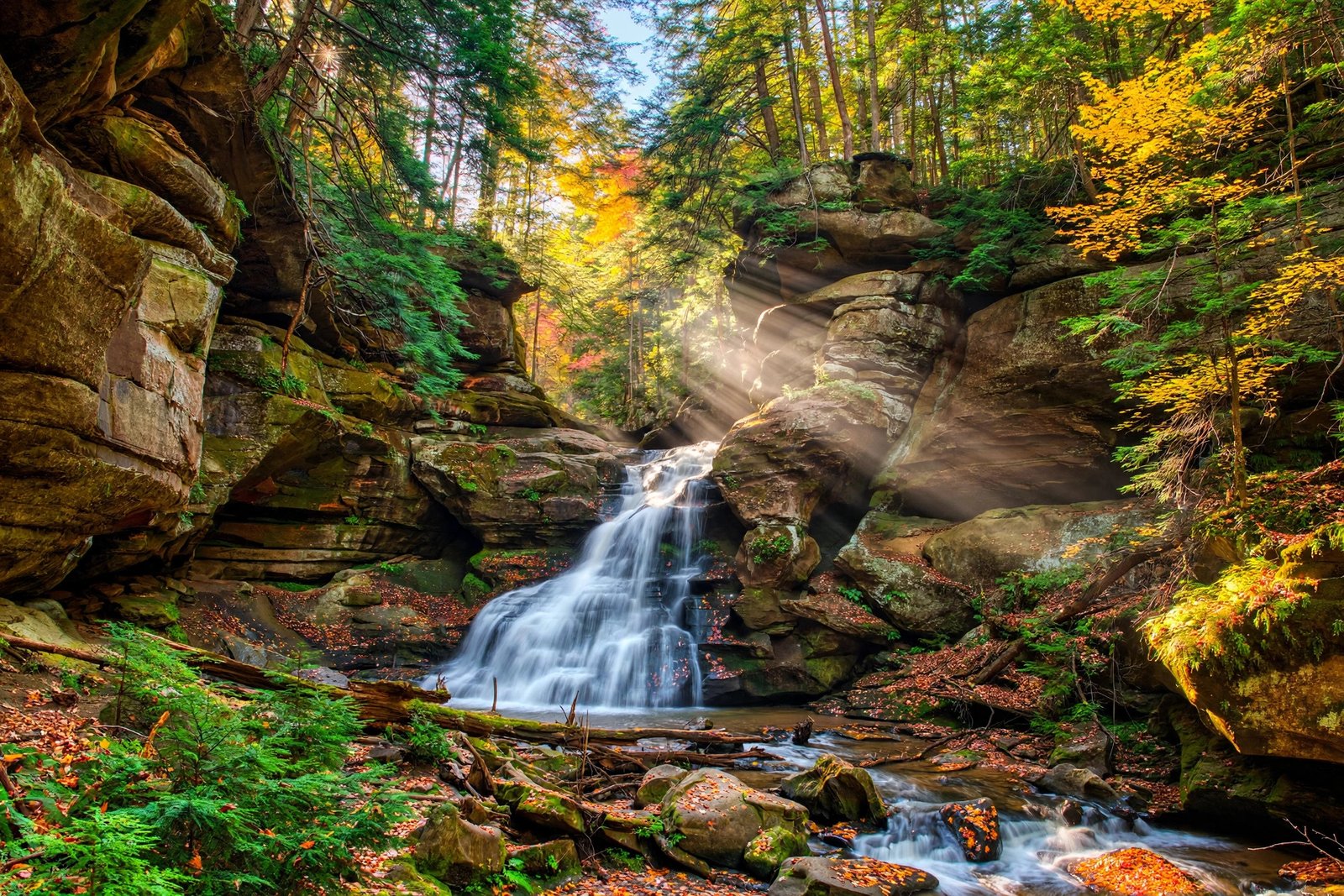
Ohio is not the first place most Americans picture when they think of cliffs, deep gorges, and waterfalls beneath towering trees. That is exactly why Hocking Hills feels like a discovery. Drive about an hour southeast from Columbus, leave the flat farmland behind, and the road begins to dip through wooded hills. Then, almost without warning, you are standing at the edge of a sandstone gorge, cool air rising from below, with a waterfall spilling over dark rock and hemlock branches arching overhead. It does not look like the Ohio most people imagine, and that surprise is a large part of its charm.
Hocking Hills State Park sits in Hocking County in southeastern Ohio, near the small city of Logan. The park covers more than 2,300 acres, and the wider region includes the adjoining Hocking State Forest and nearby nature preserves. Water slowly carved the region’s Black Hand sandstone into caves, cliffs, gorges, and waterfalls over millions of years. The park was established in 1924 and has grown into one of Ohio’s most loved outdoor destinations.
Where Is Hocking Hills, and How Do You Get There?
The main park address is 19852 State Route 664, Logan, Ohio 43138, and the visitor center sits at the Old Man’s Cave parking area off State Route 664. From Columbus, the drive is about 55 miles southeast, roughly an hour by way of U.S. Route 33 east to State Route 664. That short distance is part of the appeal: it is close enough for a day trip from Columbus, yet far enough into the hills to feel like a real escape.
Do not expect to park once and hike everywhere. The park is not one continuous block of land, and its seven major areas are spread across roughly 15 miles of Hocking County road. Most visitors drive from one trailhead to the next, hike a short trail, and move on. The park is open year-round from dawn until dusk, and night hiking is not allowed, so plan your last hike with daylight in mind. Entry to Ohio state parks, including Hocking Hills, is free. Parking, however, fills quickly on pleasant weekends, especially in October, when fall color peaks. Arriving early, visiting on a weekday, or starting at a quieter area can make a real difference.
Old Man’s Cave: The Heart of Hocking Hills
If you only have time for one hike, make it Old Man’s Cave. It is the most popular site in the park, and it earns that status. The trail, about a mile for the main area, winds through a deep gorge carved by Old Man’s Creek, past Upper Falls, Middle Falls, and Lower Falls, with stone bridges, tunnels, and stairways that feel built into the landscape. Along the way you will pass the Devil’s Bathtub, a swirling pool in the rock, and the Sphinx Head, a rock formation that rewards a slow look. Hemlock trees shade the gorge floor, keeping it cool even on a warm day, and after rain the waterfalls run fuller and louder.
The area is believed to be named for Richard Rowe, a hermit who lived in the gorge in the 18th century. The main trail is rated moderate, with steps and uneven ground, so wear shoes with good grip. The Grandma Gatewood Trail connects Old Man’s Cave to Cedar Falls and Ash Cave in a roughly six-mile through-hike for those who want a longer day. Because this is the park’s best-known stop, it is also the busiest. Go early, and you may have the gorge almost to yourself. Go at midday on a Saturday in October, and you will share it with a crowd.
Ash Cave: The Most Dramatic Room in Ohio
Ash Cave is the single most dramatic natural feature in the park, and it is also one of the easiest to reach. The gorge trail is about a quarter of a mile, easy and wheelchair accessible on the paved path to near the cave, which makes it a good choice for families and older visitors. A separate rim trail, also about a quarter of a mile and rated moderate, offers a different view from above.
Ash Cave is a horseshoe-shaped recess cave that stretches about 700 feet from end to end and rises about 90 feet at its highest point, with a seasonal waterfall dropping about 90 feet over its rim. It is one of the largest recess caves in the eastern United States, and standing beneath that curved wall of sandstone feels less like a hike and more like stepping into a cathedral built by water and time. The waterfall is fullest in spring and after heavy rain, and it can slow to a trickle in a dry summer. In winter, the same flow can freeze into sheets of ice, turning the cave into a cold, glittering hollow that draws photographers from across the region.
Cedar Falls: The Prettiest Waterfall in the Park
Cedar Falls is often called the most beautiful waterfall in Hocking Hills. The trail is about a mile and rated moderate, following Queer Creek through a hemlock-lined gorge to a wide sandstone ledge where water drops about 50 feet into a pool below. In spring, or after heavy rain, the falls run strong and loud. In a dry spell, they soften to a thinner ribbon, but the gorge itself, with its ferns, moss, and cool shade, is still worth the walk.
The name is a friendly mistake that has lasted for generations. Early settlers called the falls Cedar Falls because they mistook the region’s hemlock trees for cedar, and the name stuck. Cedar Falls is also the largest waterfall in the park in terms of water volume. It sits along the Grandma Gatewood Trail between Old Man’s Cave and Ash Cave, so strong hikers can link all three in one longer walk. Most visitors drive to the trailhead and enjoy it as a short, satisfying hike on its own.
Rock House: The Only True Cave in the Park
Rock House is different from the other caves at Hocking Hills, and that difference is what makes it special. It is the only true cave in the park, a tunnel-like rock shelter carved into the side of a cliff, about 200 feet long with a ceiling about 40 feet tall in places. Windows in the rock let in shafts of light, and the interior stays cool and dim even on a bright day. The trail is about a mile, with stone steps and uneven ground, and late afternoon, when sunlight slants through the openings, is a particularly good time to visit.
Rock House was once known as Robber’s Roost, and local lore links it to 19th-century outlaws who were said to shelter there. Long before that, Native peoples used the shelter, and interpretive panels and old carvings add a layer of history to the visit. Because Rock House is a little farther from the main Old Man’s Cave area, it draws fewer visitors than the park’s most famous stops, making it a good choice on a busy weekend. Wear sturdy shoes and watch for slippery rock after rain.
Cantwell Cliffs and Conkle’s Hollow: The Quiet Escapes
Cantwell Cliffs is the most remote of the park’s major areas, sitting about 10 miles north of Old Man’s Cave, and it rewards the extra drive with solitude and drama. The area features a broad gorge, sheer rock walls, narrow passages, and a stone stairway that winds between cliffs. One well-known feature is the Fat Woman’s Squeeze, a tight passage between rock faces. The trails here are more rugged than the paved walk at Ash Cave, with elevation changes and stairs that can be treacherous after rain, so good footwear and a slower pace matter. On a busy fall weekend, when Old Man’s Cave is full, Cantwell Cliffs often feels like a different park altogether.
Conkle’s Hollow is a state nature preserve rather than part of the state park itself, but it belongs on any Hocking Hills visit. It is one of Ohio’s deepest gorges, with cliffs nearly 200 feet high crowding a narrow valley rich with ferns and hemlock. The gorge trail is about a mile round trip, much of it paved, and it stays cool and quiet even on a hot day. A separate rim trail offers a very different view, looking down into the gorge from above, and it is tougher, with climbs and uneven ground. Note that pets are not allowed at Conkle’s Hollow, even though they are welcome on most other trails in the park when leashed. That rule helps protect the preserve’s delicate plant life.
Whispering Cave, the newest addition to the trail system, opened for public access in 2017 by way of the Hemlock Bridge Trail from near the lodge. It is a quieter stop, with a large recess cave and a seasonal waterfall, and it makes a good first or last hike of the day if you are staying at the lodge.
The Best Time to Visit Hocking Hills
There is no single best time to visit, because each season changes the park in a real way. The most popular window is April through October, when temperatures are mild and the trails are at their most accessible. Spring brings the strongest waterfall flow, thanks to melting snow and spring rain, along with wildflowers and thinner crowds. Summer offers long daylight and deep green gorges, but it also brings heat, humidity, and the busiest weekends, and waterfalls can weaken in a dry spell.
Fall is the park’s most famous season. In October, the hills turn gold, orange, and red, and photographers arrive from across the Midwest. It is also the most crowded time of year, and lodging can book months ahead. If you visit in fall, arrive early, visit on a weekday if you can, and check recent local reports rather than trusting a promised peak date, because recent weather matters more than any calendar prediction. Winter is the quietest season. Trails are empty, rates are lower, and waterfalls can freeze into ice formations. The trade-off is ice on stairs and boardwalks, short daylight, and the chance of a trail closure in extreme conditions. Dress warmly, wear traction on your shoes, and keep your plans flexible.
Where to Stay: Cabins, the Lodge, and Camping
Hocking Hills is known for its cabins, and for good reason. The region is full of private cabin rentals, from rustic lodges with stone fireplaces to luxurious retreats with hot tubs, game rooms, and scenic porches. Many visitors choose a cabin as a base for a weekend, cooking their own meals and driving a short distance to a different trailhead each morning. Book well ahead for fall weekends and holidays, when the best cabins go quickly.
Inside the park itself, the Hocking Hills State Park Lodge offers 81 guest rooms along with 40 cabins on the property, with a restaurant and an indoor pool and easy access to Old Man’s Cave. The park campground offers more than 150 sites with electric service, including full hook-up sites, along with non-electric sites and a small number of Sherman Cabins. Campground reservations are made through the Ohio Department of Natural Resources reservation system and can be made up to six months in advance.
Planning Your Visit
For a single day, start early at Old Man’s Cave, when the gorge is quiet and the light is soft. Spend an hour or two there, then drive to Ash Cave for the short, easy walk to the big recess cave. After lunch, head to Cedar Falls for the gorge walk and the waterfall, and if you still have energy and daylight, finish at Rock House or Conkle’s Hollow for a quieter end to the day. With two days, you can slow down: use the first day for Old Man’s Cave, Ash Cave, and Cedar Falls, and the second for Rock House, Cantwell Cliffs, and Conkle’s Hollow, with Whispering Cave as a gentle evening walk from the lodge.
A few practical tips will help any visit go smoothly. Wear sturdy shoes with good tread, because stone steps and wet rock are slippery in every season. Carry water and a snack, especially on the longer trails. Stay on marked trails and behind railings where they exist, because the cliffs are high and the edges can be crumbly. Keep pets leashed where they are allowed, and leave them at home for Conkle’s Hollow. Pack out everything you bring in, and check the Ohio Department of Natural Resources page for Hocking Hills State Park before you travel for current conditions, closures, and reservation information. You can find it at ohiodnr.gov, and trail-by-trail details are also gathered at hiking-ohio.com.
People come to Hocking Hills for the waterfalls and the caves, and they remember it for something quieter: the feeling of stepping down into a gorge on a hot day and feeling the air turn cool, the sound of water echoing off sandstone, and the sight of a cliff face shaped over millions of years. Go in spring for the waterfalls, in fall for the color, in winter for the ice, or in summer for the green shade of the gorges. Go early, go slowly, and let the place surprise you.
Frequently Asked Questions
Where is Hocking Hills State Park?
Hocking Hills State Park is in Hocking County in southeastern Ohio, near Logan. The main address is 19852 State Route 664, Logan, Ohio 43138, about 55 miles southeast of Columbus, roughly an hour by car. The park’s seven major hiking areas are spread across the region, so most visitors drive between trailheads.
Is Hocking Hills State Park free to visit?
Yes. Entry to Ohio state parks, including Hocking Hills, is free for day-use visitors. You will still need to book and pay for lodging, cabins, or a campsite if you stay overnight, and reservations are recommended well ahead for busy weekends.
What is the best time of year to visit Hocking Hills?
April through October is the most popular window, with spring offering the strongest waterfall flow and fall offering peak color, especially in October. Summer is green and warm but busy, and winter is quiet, with frozen waterfalls and ice formations, but with cold weather and the chance of icy trails.
Which hike should I do first at Hocking Hills?
Start with Old Man’s Cave. Its roughly one-mile trail passes waterfalls, stone bridges, and the Devil’s Bathtub in a single gorge walk, and it gives you the fullest sense of the park in the shortest time. If you want an easier first stop, Ash Cave’s quarter-mile paved gorge trail leads to the park’s largest recess cave with very little effort.