
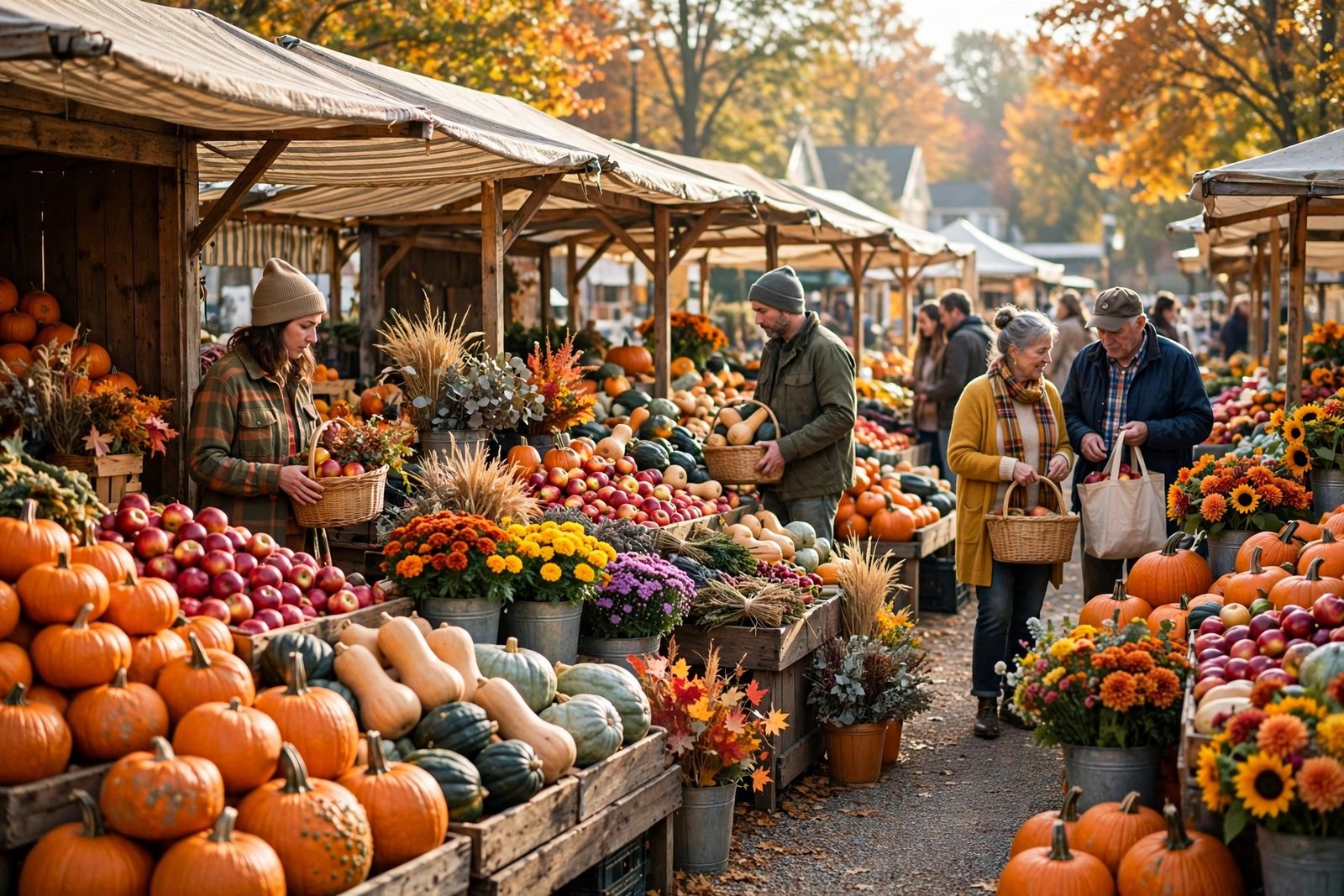
There is a particular kind of morning in America that only happens in autumn. The air is cool enough for a jacket, the light is golden, and the farmers market is at its richest. Summer’s tomatoes are giving way to crates of apples, bins of squash, and pumpkins stacked in every size. The vendors know their regulars by name, the coffee is hot, and the whole market smells faintly of cinnamon, fresh bread, and earth.
Fall farmers markets are one of the best seasonal traditions in American life. They are where the harvest actually lands: the food grown within driving distance of your town, sold by the people who grew it. Whether you are a seasoned market shopper or you have never been to one, autumn is the perfect time to start, because the season offers the widest variety of the year and the most forgiving ingredients for home cooking.
Why Fall Is the Farmers Market’s Best Season
Many people think of farmers markets as a summer thing, but experienced shoppers know that fall is when markets truly shine. Summer produce is wonderful, yet it is also fragile and fleeting. Fall crops are sturdier, more versatile, and built for the kind of cooking people actually want to do when the weather turns cool: soups, roasts, pies, and slow braises.
Fall is also harvest season for many of the crops that define American agriculture. Apples ripen across orchard country, pumpkins and winter squash mature on the vine, and root vegetables sweeten as the nights grow colder. Farmers bring their biggest hauls of the year to market in autumn, and many markets extend their hours or add special harvest events to celebrate.
There is another, quieter reason fall markets matter. For many small farms, the autumn season is when the year’s work pays off. Buying at a fall market supports growers at the moment when their harvest is in, their costs are real, and their income for the winter depends on strong sales. Every bag of apples and every loaf of bread is a direct investment in a local farm.
What to Buy at a Fall Farmers Market
Start with apples. Fall markets often carry varieties you will never see in a supermarket, each with its own character. Some are crisp and tart, perfect for eating out of hand. Others are sweet and tender, ideal for sauce. Ask the grower which variety they recommend for pie, which holds its shape when baked, and which is best eaten fresh. Growers love these questions, and their answers will make you a better cook.
Pumpkins and winter squash are the other stars of the season. Butternut, acorn, delicata, and kabocha squash each cook differently, and a good vendor will tell you how. Delicata can be sliced and roasted with its skin on, while butternut makes a silky soup and acorn halves roast beautifully stuffed with grains or sausage. Sugar pumpkins, the small, dense kind, are the ones for pie, not the large carving pumpkins sold for decoration.
Do not overlook root vegetables. Carrots, parsnips, turnips, beets, and sweet potatoes all improve after a touch of cold weather, which converts some of their starch to sugar and deepens their flavor. They roast beautifully, they keep well in a cool pantry or refrigerator, and they form the backbone of autumn soups and sheet-pan dinners.
Brassicas deserve a place on your list too. Brussels sprouts, cabbage, cauliflower, and broccoli are at their best in fall, and they reward simple cooking: roasted with olive oil and salt, shredded into slaw, or simmered into soup. Late-season greens like kale and chard are also abundant and hardy, standing up to braising in a way that tender summer greens never could.
What to Buy in November
November is the home stretch of market season in much of the country, and it is a wonderful time to shop with a plan. If you are cooking a holiday meal, the market can supply much of it: potatoes and sweet potatoes for mashing, Brussels sprouts for roasting, squash for soup or pie, and fresh herbs like sage and thyme for stuffing.
November is also the time to stock up. Root vegetables, winter squash, onions, and garlic store well, and buying them now means your pantry is ready for winter cooking. Apples keep for weeks in a cool place, and many vendors sell larger quantities at the end of the season. Ask about storage: a good grower will tell you which varieties keep longest and how to store them.
Some markets run into December or year-round in milder climates, while others close with a final harvest festival in November. If your market is seasonal, check its closing date early in the month so you do not miss the last market day. The final market of the year often has the best atmosphere of all, with vendors thanking regulars and shoppers stocking up for the winter.
For reliable information about farmers markets and local food in your area, the USDA Agricultural Marketing Service offers resources on farmers markets, local food directories, and seasonal produce.
Beyond Produce: Bread, Cheese, Honey, and More
Some of the best finds at a fall market are not vegetables at all. Many markets host bakers selling crusty sourdough, cinnamon rolls, and seasonal pies. A loaf of fresh bread, still slightly warm, is one of the great pleasures of market day, and it pairs perfectly with fall soups and stews.
Cheese vendors are another highlight. Farmstead cheeses, made from the milk of the farm’s own animals, vary with the season, and autumn cheeses can be rich and complex. Ask for a taste before you buy, and ask what pairs well with it. A wedge of sharp cheddar, a creamy goat cheese, or a nutty aged cheese can anchor a whole evening of snacking.
Honey is a classic fall market purchase, and for good reason. Local honey is beautiful in tea, drizzled over roasted squash, or baked into cakes and muffins. Many vendors also sell jams, pickles, and preserves made from the summer and fall harvest, which make excellent gifts and pantry staples.
Fall markets often feature flowers too, though the bouquets change with the season. Late dahlias, sunflowers, and dried arrangements bring autumn color indoors, and a bunch of market flowers is one of the simplest ways to make a house feel like fall.
Market Etiquette: How to Shop Like a Regular
Good market etiquette starts with arriving prepared. Bring reusable bags, and if you plan to buy a lot, bring a sturdy tote or a small cart. Many vendors accept cards, but cash is still welcome and sometimes faster, especially at busy stalls.
Ask before you touch produce. Some vendors invite shoppers to pick their own, while others prefer to select items for you to keep the display neat and the produce undamaged. When in doubt, ask. It is also polite to avoid haggling. Prices at a farmers market reflect the real cost of growing food on a small scale, and they are generally fair.
Talk to the vendors. Ask how to cook something unfamiliar, how long it keeps, or what is best this week. These conversations are part of what makes a market different from a supermarket, and vendors are usually delighted to share recipes and tips. If you become a regular, you will find that vendors remember you, set things aside for you, and tell you when something special is coming in.
Finally, be patient and flexible. Markets are busiest in the first hour, and popular items sell out. If the squash you wanted is gone, ask what the vendor recommends instead. Some of the best market meals come from an unplanned substitution.
Supporting Local Growers
Shopping at a farmers market is one of the most direct ways to support local agriculture. When you buy from a grower, a much larger share of your money stays with the farm than when you buy through a long supply chain. That money helps farms survive, keeps farmland in production, and supports rural communities.
It also shortens the distance your food travels. Produce at a market was often picked within a day or two of sale, which means it is fresher and often more flavorful than produce shipped across the country. Shorter trips also mean less packaging and less waste, which is better for everyone.
If you want to support growers beyond your weekly shopping, consider joining a farm’s community supported agriculture program, often called a CSA, for the following season. Many farms sign up members in the fall for the next year, and a CSA share guarantees the farm income through the winter while giving you a regular box of seasonal produce.
Preserving the Harvest: Freezing, Roasting, and Storing
Fall is the season to put food by. If you buy more than you can eat in a week, preserving it is easy and rewarding. Many fall vegetables freeze beautifully. Blanch green beans, broccoli, or cauliflower before freezing, and roast and puree squash or pumpkin for soups and pies later in the winter.
Apples can be turned into sauce, butter, or pie filling and frozen in portions, and root vegetables can be roasted in big batches and frozen for quick weeknight sides. Soups made from fall vegetables freeze exceptionally well and taste even better after a few weeks in the freezer.
Proper storage matters too. Keep potatoes, onions, and garlic in a cool, dark, dry place, and keep them separated, since onions can cause potatoes to sprout. Winter squash keeps for weeks or even months in a cool spot. Apples last longest in the refrigerator, away from other produce that their ethylene gas can ripen too quickly.
Preserving a little of the fall harvest is a gift to your future self. In January, when the market is a distant memory, a container of roasted squash soup from your freezer tastes like autumn all over again.
Frequently Asked Questions
When is the best time to visit a fall farmers market? Arrive early for the best selection, since popular items sell out, or arrive in the last hour if you prefer a quieter visit. Many vendors discount remaining produce near closing time, though selection will be smaller.
What produce is in season at fall farmers markets? Apples, pumpkins, winter squash, root vegetables, Brussels sprouts, cabbage, cauliflower, kale, and late-season greens are all typical fall offerings, along with bread, cheese, honey, and preserves.
Are farmers market prices higher than supermarkets? Some items cost more than supermarket equivalents, because small-scale farming is labor-intensive. Many shoppers find the freshness, flavor, and direct support for local farms worth the difference, and staple fall crops like squash and root vegetables are often very reasonably priced.
How do I store fall market produce? Keep root vegetables and squash in a cool, dark place, refrigerate apples and greens, and freeze soups, purees, and blanched vegetables for winter use. Ask your vendor for storage advice for anything unfamiliar.
Do farmers markets run in November? Many do, though hours and closing dates vary by region and climate. Some markets run year-round in milder areas, while others close with a harvest festival in November. Check your local market’s schedule early in the month.