
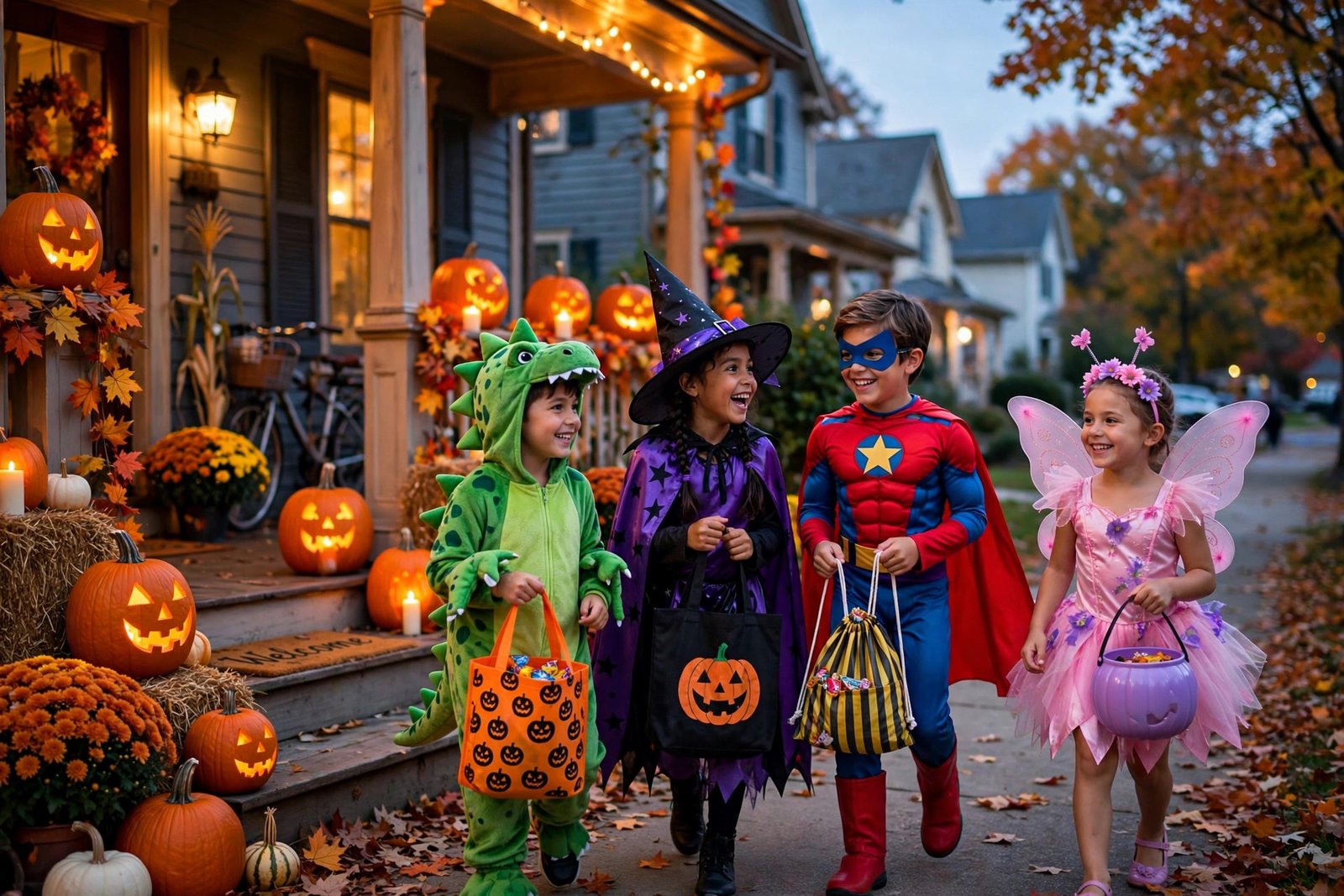
Halloween in America has outgrown its origins. What began as a night of costumes and candy for children is now a season-long celebration that fills stores in September, dominates social media feeds in October, and moves billions of dollars through the economy. In 2026, Americans were expected to spend a record 13.5 billion dollars on Halloween, according to the National Retail Federation’s annual survey, edging past the previous record of 13.1 billion dollars in 2025. The holiday that once belonged to kids on one night now belongs to everyone, for a whole month, and the numbers tell the story of a tradition that keeps getting bigger.
The NRF survey, conducted by Prosper Insights and Analytics, asked 7,889 consumers about their Halloween plans from September 1 to 9, 2026, with a margin of error of plus or minus 1.1 percentage points. About 74 percent of consumers planned to celebrate, up from 73 percent in 2025 and 68 percent in 2019. The average celebrant planned to spend 115.14 dollars, barely above the 114.45 dollars of 2025, which suggests that Halloween’s growth in 2026 came more from broad participation than from bigger individual budgets. You can read the federation’s own announcement in the NRF press release on 2026 Halloween spending.
Where the Money Goes
Halloween spending splits almost evenly three ways, and that balance is part of what makes the holiday so resilient. Costumes led the bill at 4.4 billion dollars, with 71 percent of shoppers planning to buy one. Decorations followed at 4.3 billion dollars, with 78 percent of shoppers buying. Candy, the most universal purchase, accounted for 4.1 billion dollars, with 96 percent of shoppers buying sweets. Greeting cards added another 0.8 billion dollars, with planned purchases rising to 42 percent of shoppers from 38 percent in 2025.
Per person, the average celebrant’s 115.14 dollars broke down to roughly 37 dollars for costumes, 36 dollars for decorations, and 35 dollars for candy. Those averages hide wide variation: some households spend a few dollars on a bag of candy and call it done, while others transform their yards into haunted attractions and spend hundreds. But the overall picture is of a holiday where spending is spread widely rather than concentrated in one category, which helps explain why so many different kinds of retailers, from discount stores to specialty costume shops to online sellers, all compete for Halloween dollars.
Discount stores were expected to be the top shopping destination in 2026, attracting 39 percent of shoppers, followed by Halloween and costume stores at 32 percent and online retailers at 27 percent. That mix reflects how Halloween shopping has changed: the season starts earlier, much of it happens online, and price sensitivity shapes decisions. The NRF found that 79 percent of shoppers expected tariffs to push Halloween prices higher, and many said they were shopping earlier and more strategically as a result.
Costumes: From Witches to Superheroes
Costumes are the creative heart of Halloween, and the 2026 rankings show how the holiday spans generations. For adults, the witch remained the top choice, with 4.8 million adults planning to wear one, a reminder that the classic costume never goes out of style. For children, Spider-Man led the way, with 4.6 million kids planning to wear the suit. Pets got in on the action too, with 920 million dollars expected to be spent on pet costumes, a category that barely existed a generation ago and now includes everything from pumpkin outfits for dogs to elaborate costumes for cats.
Costume spending also reflects how Halloween has become a holiday for adults. Adult costumes accounted for about 2 billion dollars of the 4.4 billion total, with children’s costumes at about 1.5 billion. Adults do not just buy costumes; they attend parties, visit haunted houses, and decorate their homes with an enthusiasm that rivals any children’s celebration. The Halloween and Costume Association’s analysis of the NRF data found that 57 percent of adults who wear costumes begin shopping by September, and a third plan to visit a haunted house, showing how early and how seriously grown-ups take the season.
Social media has transformed costume culture as well. Online search remained a major source of costume inspiration, though its share fell to 32 percent in 2026 from 37 percent the previous year, the lowest level in a decade, while retail stores and costume shops became the top source of inspiration for decorations and the second most popular source for costumes. Viral trends, from movie characters to internet memes, can drive a costume to sell out in days, and the annual race to identify the year’s breakout costume has become its own tradition.
Candy and the Price Squeeze
Candy is the one purchase almost every Halloween household makes, and in 2026 it came with a pinch. Government data showed that the candy and chewing gum price index rose 7.7 percent over the 12 months ending in September 2026, roughly twice as fast as overall consumer prices. A separate retail check found that a full-price, assorted 100-piece Halloween candy bag cost about 16.96 dollars in 2026. For families buying for a busy trick-or-treat street, those prices add up fast.
The price pressure did not stop people from buying. Candy spending was projected at 4.1 billion dollars, and 96 percent of shoppers planned to buy sweets. But shoppers adapted: many bought earlier, watched for sales, and chose larger packs or store brands. The NRF’s finding that consumers were approaching the season with affordability in mind showed up most clearly in candy, where the purchase is universal but the budget is flexible. Some households bought less candy per trick-or-treater, while others leaned on bulk buying to keep costs down.
The candy aisle also reflects a longer trend. Candy prices have risen sharply over the first half of the decade, driven by cocoa, sugar, and transportation costs, and some analysts noted that candy budgets buy considerably less candy by weight than they did in 2020. Yet Halloween candy endures because it is not really about the candy. It is about the ritual: the doorbell, the costumes, the exchange between neighbors. That ritual is remarkably resistant to price changes, which is why candy remains the holiday’s most reliable purchase.
How Americans Actually Celebrate
Beyond the spending, the NRF survey captured what Americans actually do on Halloween. Handing out candy topped the list at 61 percent, followed by dressing in costume at 50 percent. Decorating the home or yard, carving pumpkins, and watching scary movies each drew 42 percent. These are not exotic activities; they are the familiar rituals that have defined Halloween for generations, and their persistence explains the holiday’s staying power.
The celebrations also extend well beyond October 31. Haunted houses, pumpkin patches, corn mazes, and fall festivals stretch the season across the whole month, and many communities hold trunk-or-treat events, parades, and costume contests in the weeks before Halloween itself. For families with young children, these events have become as important as trick-or-treating, offering safer, more organized ways to celebrate. For adults, Halloween parties, bar crawls, and horror movie marathons fill the calendar.
Regional differences add flavor. In Salem, Massachusetts, the entire month of October becomes a festival drawing visitors from around the world. In New York, the Village Halloween Parade turns Greenwich Village into a moving costume party. In small towns across America, main street trick-or-treating and school carnivals keep the holiday local and communal. The national numbers capture the spending, but the local traditions capture the spirit.
Halloween’s Remarkable Growth
Halloween’s rise to a 13.5 billion dollar holiday is a recent phenomenon. The NRF has conducted its Halloween survey since 2005, and the totals have climbed steadily through the 2020s, from about 10 billion dollars in the early part of the decade to the record levels of 2025 and 2026. Spending has increased by more than 68 percent since 2019, though that figure is not adjusted for inflation, and part of the growth reflects higher prices rather than more purchases.
Several forces explain the growth. First, Halloween has expanded from a children’s holiday into an adult celebration, roughly doubling its audience. Second, the season has lengthened, with shopping starting in September and events filling October. Third, social media has amplified the holiday, turning costumes and decorations into shareable content and inspiring ever more elaborate displays. And fourth, Halloween has proven remarkably resilient to economic worries: even when consumers say they are watching budgets, they protect Halloween spending, treating it as a priority rather than a luxury.
There are signs of caution in the 2026 data. Average per-person spending rose only 69 cents from 2025, the smallest kind of increase, suggesting that consumers are reaching the limits of what they will spend. Actual sales data from the weeks before Halloween showed candy sales down from the prior year in one monthly measure, a reminder that survey forecasts capture plans, not final results. The honest read of 2026 is not a boom but a plateau at a very high level: Americans love Halloween as much as ever, but they are spending more carefully within it. For a broader look at the season’s economics, the Bureau of Labor Statistics consumer price data, available through the BLS Consumer Price Index release, provides the official inflation backdrop behind the candy price story.
What Comes Next for Halloween
Looking ahead, Halloween’s future seems secure, though its shape will keep evolving. Retailers are already planning for longer seasons, more online shopping, and greater price sensitivity. Costume trends will continue to follow movies, television, and viral moments, and the pet costume category shows no signs of slowing. Sustainability is also entering the conversation, with more shoppers choosing reusable decorations and costumes over disposable ones.
What will not change is the core of the holiday. Children in costumes, neighbors handing out candy, pumpkins on porches, and the simple pleasure of a little spooky fun on a crisp autumn night: these are the things that made Halloween beloved long before it became a 13.5 billion dollar industry, and they are the reason it will keep growing, in whatever form the next October takes.
Frequently Asked Questions
How much did Americans spend on Halloween in 2026? Americans were expected to spend a record 13.5 billion dollars on Halloween in 2026, according to the National Retail Federation’s annual survey, up from 13.1 billion dollars in 2025.
How much does the average person spend on Halloween? The average celebrant planned to spend 115.14 dollars in 2026, up slightly from 114.45 dollars in 2025.
What do Americans spend the most on for Halloween? Costumes led at 4.4 billion dollars, followed by decorations at 4.3 billion and candy at 4.1 billion. Candy is the most common purchase, with 96 percent of shoppers buying it.
What were the most popular costumes in 2026? For adults, the witch was the top costume, with 4.8 million adults planning to wear one. For children, Spider-Man led with 4.6 million kids. Pet costumes accounted for about 920 million dollars in spending.
How many Americans celebrate Halloween? About 74 percent of consumers planned to celebrate Halloween in 2026, up from 73 percent in 2025 and 68 percent in 2019, according to the NRF survey.
Are the NRF figures actual sales or forecasts? They are forecasts based on a survey of planned spending. The 2026 survey asked 7,889 consumers about their plans from September 1 to 9, so the figures reflect intentions, not final sales totals.