
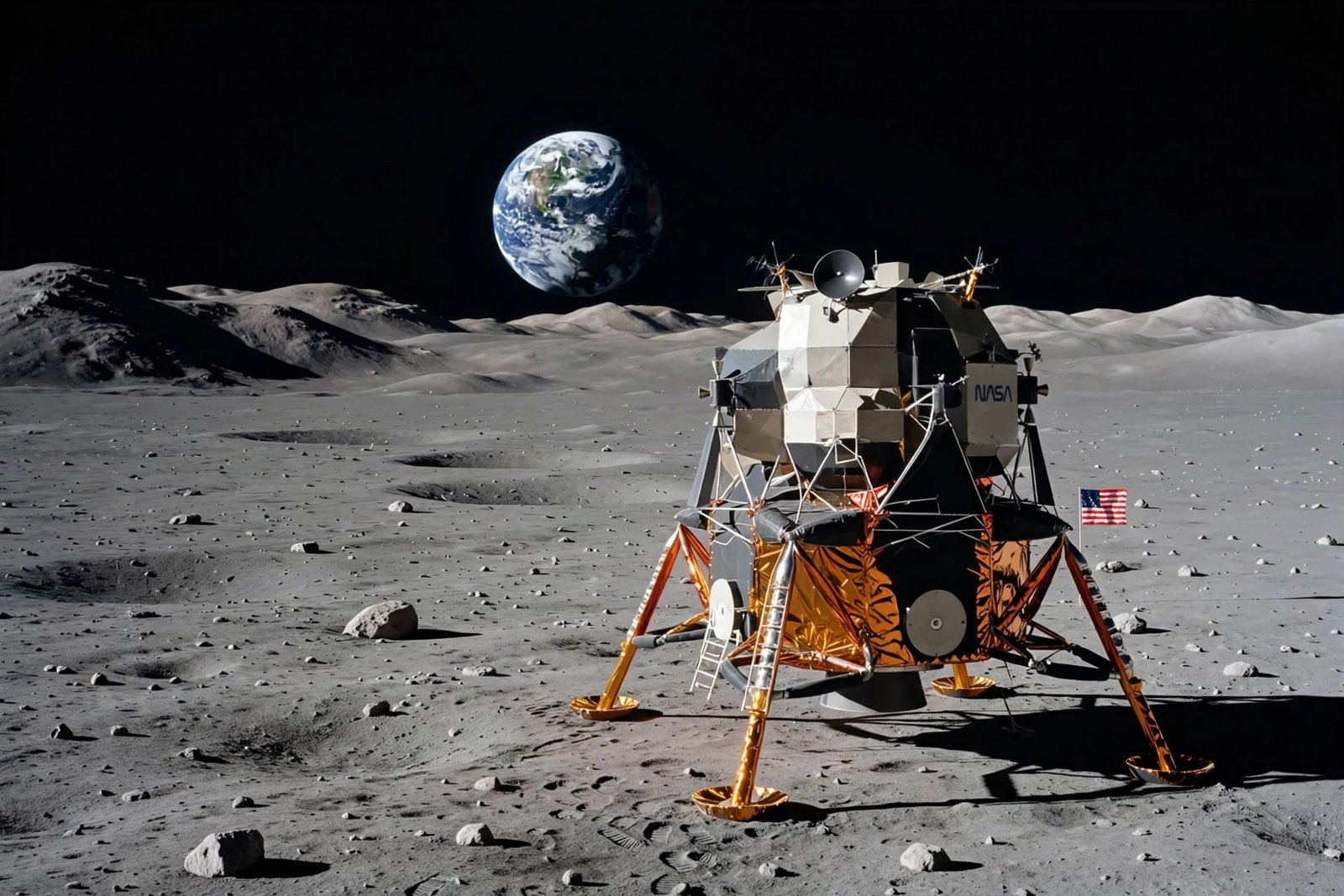
On Saturday, November 7, 2026, NASA made one of the biggest commercial space announcements in years. At the MAX POWER aerospace expo at Kennedy Space Center in Florida, the agency named eight companies eligible to compete for lunar delivery work under a new ten-year framework called Commercial Lunar Payload Services 2, or CLPS 2. The combined ceiling on that framework is $10 billion, a number that instantly filled headlines across America.
But the number needs unpacking. The $10 billion is a maximum value for future orders, not money already handed to any company. No single firm received a $10 billion contract, and no specific lander, payload, or launch date came with the announcement. What NASA actually created is a pre-approved pool of cargo carriers that will bid against each other, mission by mission, to haul science instruments, technology demonstrations, and base-building hardware to the surface of the Moon.
That distinction matters, because CLPS 2 is the delivery backbone of NASA’s plan for a permanent Moon Base near the lunar south pole. Here is what was announced, what the money really means, and why it matters.
What NASA Actually Announced on November 7
NASA announced the awards in a release numbered 26-095, titled “NASA Awards Moon Base Transportation, Technology, Science Projects,” dated November 7, 2026. The agency framed the whole package as building the Moon Base “mission by mission,” a phrase Administrator Jared Isaacman used in the release.
The centerpiece was the CLPS 2 selection: Blue Origin, Firefly Aerospace, Intuitive Machines, ispace US, Lockheed Martin Space, Northrop Grumman Space Systems, SpaceX, and Voyager Technologies. Each now holds a place in the pool, but none has yet been handed a specific delivery mission, and NASA has not published a schedule of task orders.
Alongside CLPS 2, NASA announced a separate, concrete award: a $94 million base contract for Blue Origin to deliver the nuclear-powered PROMISE rover to the Moon’s south pole aboard its Blue Moon Mark 1 lander, with a further $140 million available through a performance-based option. The agency also announced about $1.3 billion in launch and in-space transport task orders, and it raised the ceiling on the original CLPS contract.
The $10 Billion Number, Explained
The figure that dominated the headlines is real, but it is a ceiling, not a check. CLPS 2 is a multiple-award, indefinite-delivery/indefinite-quantity contract, often shortened to IDIQ. In plain language, NASA has pre-qualified a pool of vendors and set a maximum total value for all the delivery orders it may place with them over the life of the contract. The agency then issues individual task orders for specific missions, and the companies compete for each one.
Under the model contract, each of the eight companies is guaranteed just $25,000 under its base contract. Applied across all eight selections, that makes the aggregate guaranteed minimum $200,000 before any future task orders are issued. The government is not obligated to order more than that minimum from any individual company. The $10 billion is the combined maximum for all orders across all eight companies over ten years, and it will only be reached if NASA orders enough missions to get there.
The base ordering period runs through September 30, 2036. NASA may exercise a five-year option extending the framework through September 30, 2041, and raising the cumulative ceiling to $15 billion. That option is NASA’s choice, not a commitment.
This structure is deliberate. By capping the total but guaranteeing almost nothing up front, NASA keeps the financial risk on performance. A company that lands reliably and on schedule can expect a steady stream of task orders. A company that misses will simply not be selected for the next one. It is the same commercial logic that reshaped cargo deliveries to the International Space Station, applied to a much harder destination.
The Eight Companies on the CLPS 2 Roster
The eight companies NASA selected span the full range of the American space industry, from household names to specialist lunar firms. Blue Origin and SpaceX are the two most famous names on the list, and their rivalry has come to define the commercial space race. Blue Origin, founded by Jeff Bezos, is already building its Blue Moon lander family, while SpaceX brings its Starship system and a long record of NASA cargo and crew flights.
Firefly Aerospace and Intuitive Machines have the most direct CLPS experience. Firefly’s Blue Ghost Mission 1 delivered ten NASA payloads to Mare Crisium in the first fully successful landing of the program. Intuitive Machines made history with IM-1 in February 2024, the first commercial Moon landing, delivering six NASA payloads near the south pole even though the lander tipped over.
Lockheed Martin Space and Northrop Grumman Space Systems bring decades of deep-space and defense experience, and their presence signals that CLPS 2 is not only for startups. ispace US, the American arm of the Japanese lunar exploration company ispace, adds international commercial experience to the pool, and Voyager Technologies rounds out the list as a newer entrant focused on space infrastructure.
Some have already landed on the Moon; others have not yet flown a lunar mission. Under CLPS 2, past performance will matter, but any of the eight can win work by proving it can deliver.
What Is CLPS, and Why Did NASA Create It?
NASA established the Commercial Lunar Payload Services initiative in 2018, inviting American companies to carry its science and technology payloads to the lunar surface. Instead of NASA designing, building, and operating its own landers, it would buy delivery as a service from commercial firms, much as it buys cargo flights to the space station. NASA initially welcomed nine companies in November 2018, and added five more a year later, bringing the total to fourteen. Under the program, NASA buys end-to-end delivery: payload integration, mission operations, launch from Earth, and landing on the surface.
The early results were mixed. Astrobotic’s Peregrine Mission One launched in January 2024 but suffered a propellant leak that prevented any landing attempt. Intuitive Machines’ IM-1 landed the following month, the first commercial Moon landing in history, but the spacecraft tipped over and its mission was cut short. Firefly’s Blue Ghost Mission 1 then delivered a clean success, landing upright and operating its full payload set.
Those hard landings taught NASA something important: landing at the lunar south pole, where the light is low and the terrain is rough, is substantially harder than landing at mid-latitudes. That is exactly the region where astronauts are headed, so the robotic scouts are learning the lessons before human lives are at stake.
The original CLPS contract carried a cumulative maximum value of $2.6 billion through 2028. As part of the November 7 announcement, NASA raised that ceiling to $4.2 billion to support the first phase of Moon Base work. The original contract will remain in place through November 2028, with an additional five-year period to complete awarded lunar deliveries through November 2033. The old framework keeps flying its existing missions while the new one takes over the heavier lifting. NASA publishes its own overview of the program at its Commercial Lunar Payload Services page.
What CLPS 2 Will Actually Deliver
CLPS 2 is designed for a bigger job than the original program. Where the first CLPS framework focused on smaller robotic landers carrying science instruments, CLPS 2 is aimed at the cargo-lander network a permanent base requires. According to Moon Base program manager Carlos Garcia-Galan, CLPS 2 is designed for heavier Phase 2 landers carrying two to six metric tons of cargo to the surface. That scale changes what is possible: a lander carrying several tons can deliver habitats, power systems, rovers, and the kind of infrastructure that turns a landing site into a base.
NASA has said the CLPS 2 companies will manage, build, and operate landers carrying science, technology, and infrastructure payloads to the Moon. The emphasis on infrastructure is the clearest sign the agency is planning a sustained presence rather than a series of short visits.
The payloads themselves will follow the pattern set by the first CLPS missions. Science instruments will study the lunar surface and its resources, technology demonstrations will test equipment astronauts will rely on, and exploration payloads will scout landing sites and map water ice. Water ice is the key resource at the south pole. It sits in permanently shadowed craters that have not seen sunlight in billions of years, and it could one day be turned into drinking water, breathable oxygen, and even rocket propellant.
The PROMISE Rover and the Rest of the November 7 Package
The most concrete award went to Blue Origin: a $94 million base contract, with a further $140 million available through a performance-based option, to deliver NASA’s PROMISE rover to the lunar south pole aboard its Blue Moon Mark 1 lander. PROMISE, short for Polar Rover for Observation, Mapping, and In-Situ Exploration, is a six-wheeled, nuclear-powered rover built partly from spare parts developed for Mars rovers.
The mission is aimed directly at the water ice question. PROMISE is targeted for launch in late 2028, followed by an eighteen-month mission hunting for water ice in the shadowed regions of the south pole. A nuclear power source matters here because the rover must operate in places where sunlight is scarce or absent entirely. Solar panels cannot do that job, so a nuclear-powered rover can keep working through the long lunar night and inside dark craters.
NASA also announced about $1.3 billion in launch and in-space transport task orders. Six task orders went to three prime contractors: Arrow Science and Technology, Blue Origin, and Impulse Space. Those orders fall under an existing ten-year launch-services vehicle, known as VADR, with a maximum aggregate value of $5 billion.
SpaceX’s piece of the package sits in that same layer. NASA selected the company to launch communications satellites aboard its Starship rocket into cislunar space in 2028. NASA also named Honeybee Robotics, Redwire, and Yank Technologies for power tower components, the hardware that will generate and distribute electricity on the surface. Taken together, the package covers the full chain a base needs: rockets to get there, landers to touch down, a rover to scout resources, power to run it all, and satellites to phone home.
How CLPS 2 Fits the Artemis Plan and the Moon Base
CLPS 2 is the robotic vanguard of NASA’s Artemis campaign, the program to return astronauts to the Moon and establish a long-term human presence there. Under Artemis, commercial deliveries that began in 2023 perform science experiments, test technologies, and demonstrate capabilities to help NASA explore the Moon and prepare for human missions. Artemis I, the uncrewed test flight around the Moon, launched in 2022, and crewed flights are planned to follow.
The Moon Base program dates from March 24, 2026, when Administrator Jared Isaacman announced a reshaped lunar strategy at an event called Ignition. The plan paused the Gateway station that had been intended to orbit the Moon and redirected effort toward the surface. The goal is a permanent outpost near the south pole, built up mission by mission.
A base is not one spacecraft. It is a sequence of deliveries: first the scouts and instruments, then power and communications, then habitats and rovers, then the crews who will live in them. CLPS 2 is the standing arrangement that provides those rides, with competition keeping the price honest and the schedule tight.
What Happens Next
The next milestone to watch is the first CLPS 2 task order. NASA has not announced one yet, and until it does, the $10 billion ceiling is potential, not progress. When the first orders appear, they will show which companies NASA trusts first, what cargo is going up, and how fast the base is really being built.
Watch the PROMISE rover as well. Its late-2028 launch target and eighteen-month mission will be one of the first real tests of whether the base plan can find and use lunar water.
NASA has not spent $10 billion on the Moon. It has set up a ten-year competition worth up to $10 billion, picked eight companies to compete in it, and put real money behind the rover and rockets that will use it. The base will be built one delivery at a time.
Related reading
For more on America’s space ambitions, read Artemis II and NASA’s next steps to the Moon, the US Space Force, America’s newest military branch, and how the Moon landing gave America GPS and the internet.
Frequently Asked Questions
Did NASA really award $10 billion to one company?
No. NASA selected eight companies to compete for lunar delivery work under CLPS 2, a ten-year framework with a combined maximum value of $10 billion. The figure is a ceiling for all future task orders across all eight companies, not money already paid to any single firm.
Which companies are in the CLPS 2 pool?
Blue Origin, Firefly Aerospace, Intuitive Machines, ispace US, Lockheed Martin Space, Northrop Grumman Space Systems, SpaceX, and Voyager Technologies. Each is guaranteed only $25,000 under its base contract and must compete for individual delivery missions.
What does CLPS stand for?
Commercial Lunar Payload Services. It is NASA’s program for buying lunar delivery as a commercial service: American companies build and operate the landers, and NASA pays them to carry its science, technology, and infrastructure payloads to the Moon’s surface.
When will the first CLPS 2 mission fly?
NASA has not announced a first CLPS 2 task order or mission date. The framework’s base ordering period runs through September 30, 2036, and missions will be ordered one at a time as the Moon Base program needs them.
What is the PROMISE rover?
PROMISE stands for Polar Rover for Observation, Mapping, and In-Situ Exploration. It is a six-wheeled, nuclear-powered rover that Blue Origin will deliver to the lunar south pole under a $94 million base contract, targeting a late-2028 launch for an eighteen-month mission searching for water ice.