
Three of the most powerful men on the planet may soon be sitting at the same table. President Donald Trump has said he will likely meet Chinese President Xi Jinping and Russian President Vladimir Putin in a rare three-way meeting on the sidelines of the APEC summit in Shenzhen, China, next week. If it happens, it would be the first trilateral summit of its kind — a gathering of the leaders of the world’s three largest nuclear-armed powers at a moment when war in Ukraine, a fragile trade truce, and the future of nuclear arms control are all on the line.
But the meeting is not confirmed. Beijing has said only that it is “in communication with relevant parties” about the idea, and the Kremlin says work is under way to arrange it. The gap between “likely” and “confirmed” matters, because the history of great-power diplomacy is full of meetings that were talked about, planned for, and then quietly dropped.
What Trump Actually Said
Speaking to reporters on Sunday, November 8, President Trump said a deal on the Russia-Ukraine war, the Iran issue, and nuclear arms control would be on the agenda for his trip to China. “One of the meetings will be with President Putin and President Xi, and that’ll be interesting,” he said, according to reporting by The Hindu. The phrasing was characteristically casual for an announcement of this magnitude — a single sentence, delivered in passing, that instantly became one of the biggest diplomatic stories of the year.
Trump also confirmed that he will meet Xi bilaterally during the trip. It would be their third meeting this year, following Trump’s visit to Beijing in May and Xi’s trip to Washington in September 2026. That bilateral meeting is the one part of the trip that looks solid. The three-way session is the part that is still being negotiated.
The idea itself is not new. The Financial Times reported on November 3 that officials from the United States, China, and Russia had been holding undisclosed talks about a trilateral summit for about two weeks, with Washington and Moscow pressing Beijing to agree to host it. The Kremlin’s spokesman, Dmitry Peskov, said on November 3 that “work is under way on organising such a meeting” and that he hoped it would be finalised in the coming days. A day later, China’s Foreign Ministry confirmed publicly for the first time that discussions were taking place. “China is maintaining communication with relevant parties on a meeting of the heads of state of China, Russia and the United States,” spokesperson Mao Ning told reporters in Beijing on November 4.
Not everyone in Beijing sounds enthusiastic. German President Frank-Walter Steinmeier said after talks with Xi that the Chinese leader had been surprised by rumours of the summit, and TRT World reported that, according to people familiar with the talks, China has not yet decided whether to proceed. The picture is of a meeting that two of the three parties want and the host is still weighing.
What Is APEC — and Why Shenzhen?
APEC stands for Asia-Pacific Economic Cooperation. It is a forum of 21 member economies around the Pacific Rim, focused on trade and economic cooperation rather than security. Its members include the United States, China, Russia, Japan, Canada, Australia, and others, and together they account for a large share of the world’s economic output. The forum’s big annual event is the APEC Economic Leaders’ Meeting, where heads of state and government gather for two days of formal sessions — and, just as importantly, for the side meetings that happen in the corridors.
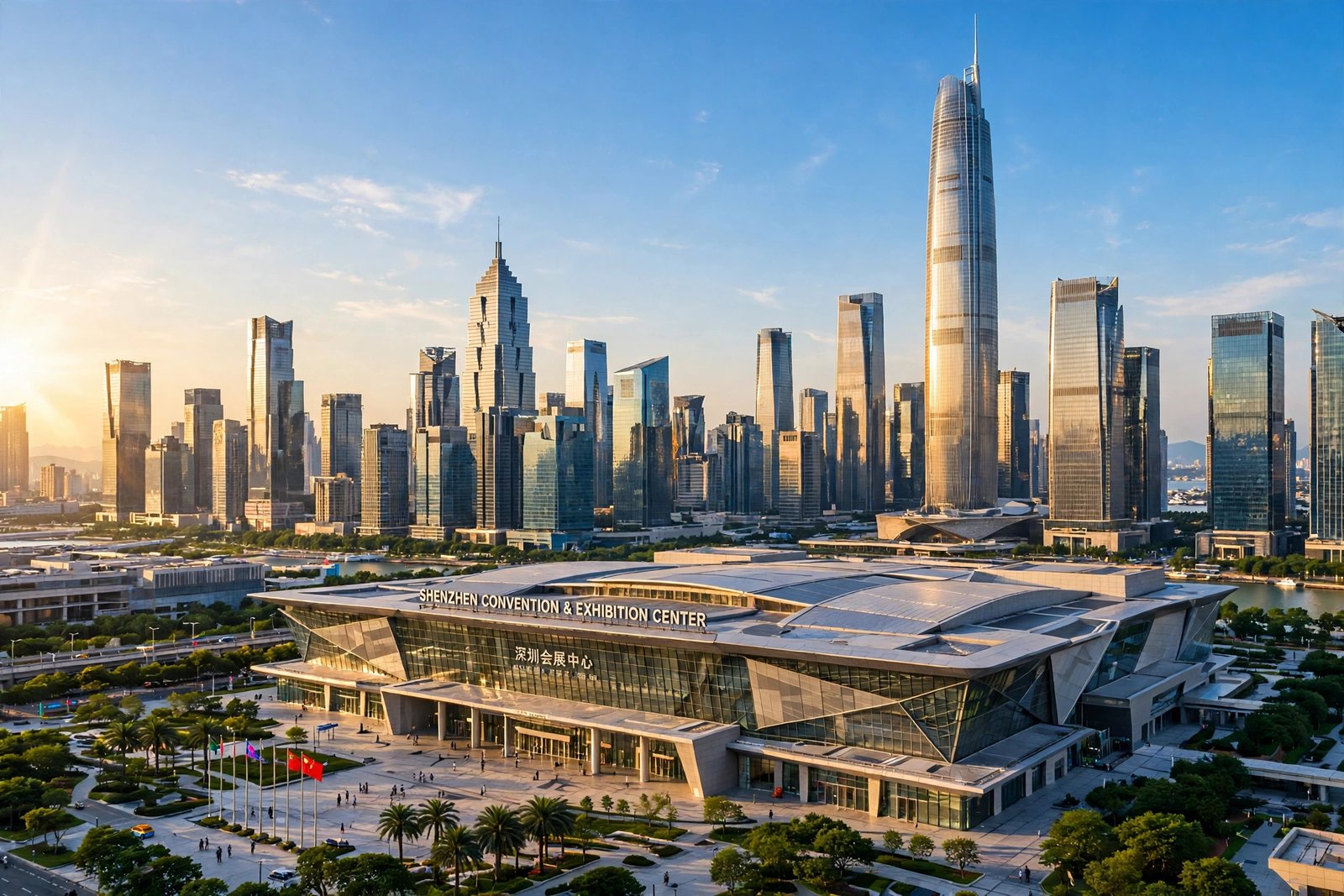
This year China is the host, and the 33rd APEC Economic Leaders’ Meeting will be held in Shenzhen on November 18 and 19, 2026. It is the third time China has hosted the summit and the first in 12 years, according to Chinese state media. Shenzhen is a deliberate choice of stage. The city in southern China’s Guangdong province grew from a fishing village into one of the world’s great technology and manufacturing hubs, and it has become a symbol of China’s economic rise. Hosting world leaders there lets Beijing show off its modern face — gleaming towers, advanced factories, and a skyline that looks like the future.
The timing matters too. The leaders’ summit runs November 18–19, with the APEC CEO Summit running alongside on November 17–18. That gives the three leaders a natural window: they will all be in the same city, at the same event, with their schedules already cleared. A trilateral meeting on the sidelines would not require a separate summit or a special trip. It would simply require agreement.
The Ukraine Question: Abu Dhabi First
Before Shenzhen, there is Abu Dhabi. US-mediated talks between Russia and Ukraine are scheduled for Tuesday and Wednesday, November 10 and 11, in the capital of the United Arab Emirates. The talks are the immediate focus of American diplomacy, and they will shape whatever happens in Shenzhen — if the Abu Dhabi talks produce momentum, a trilateral meeting becomes more valuable; if they collapse, it becomes harder to justify.
Europe is watching both tracks nervously. Foreign ministers from the Group of Seven are meeting in Paris on November 9 and 10, and their message to US Secretary of State Marco Rubio has been blunt: Europe must have a say in any deal to end Russia’s war on Ukraine. German Foreign Minister Johann Wadephul said Europe “must have a place at the table,” and French Foreign Minister Jean-Noel Barrot said Europeans would be represented at the Abu Dhabi talks, with France participating. Ukraine’s foreign minister, Andrii Sybiha, is set to join a session on Ukraine in Paris on Tuesday, November 10.
The European concern is straightforward. A deal negotiated mainly between Washington and Moscow could force Kyiv to accept terms it would never choose for itself. The G7 meeting in Paris, which Al Jazeera reported on November 10, is Europe’s attempt to make sure that does not happen. The ministers from Britain, Canada, France, Germany, Italy, Japan, and the United States are also using the Paris meeting to press Washington to avoid a new escalation with Iran.
Whether Ukraine is even on the agenda in Shenzhen is itself disputed. Trump listed a deal on the Russia-Ukraine war among the topics he expects to discuss. But Beijing has pushed back on that framing. According to reports, Xi has told interlocutors that Ukraine is a European conflict and not a subject for a three-way meeting — a position that would leave the Shenzhen conversation focused on other issues. That disagreement over the agenda may be one reason Beijing has not yet confirmed the meeting.
Iran: “Effectively Over,” for Now
The second item on Trump’s stated agenda is Iran, and here the tone from Washington has shifted noticeably in the last few days. On Monday, November 9, Trump told reporters he believes the war in Iran “militarily is effectively over.” “We’re just keeping it the status quo,” he said during a surprise visit to the White House briefing room after meeting Qatar’s prime minister, Sheikh Mohammed bin Abdulrahman bin Jassim Al Thani.
A day earlier, in a phone interview with CNN, Trump said further US strikes on Iran were “highly unlikely” as long as negotiations make progress and Tehran signs what he called a “strong agreement.” The comments mark some of his clearest signals yet that he may not resume the bombardment after repeatedly threatening further military action. At the same time, he was careful to keep the threat alive: “The military action doesn’t seem to be a very necessary thing, but we’re locked and loaded, ready to go for any reason that changes,” he said. He also said the United States had identified infrastructure targets, including 38 bridges, that it would strike if military action resumes.
The de-escalation matters for Shenzhen because both Russia and China have interests in Iran, and both have watched the US military campaign with alarm. Trump said he would talk to Xi and Putin about ending the war in Iran, and he pointed to what he described as positive momentum in negotiations. The US operation known as Iron Gate, which aims to disrupt Iran’s land supply routes, is now in effect, according to the president — a form of pressure that continues even as the bombing pauses.
The key point is the conditional nature of the calm: the war is “effectively over” in Trump’s telling, but only while negotiations move forward and only while the status quo holds. That is a pause, not a peace treaty — and it is the kind of pause that a meeting of three world leaders could either lock in or unravel. The Hindu’s report on Trump’s November 9 remarks lays out the quotes in full.
Trade: The Truce With a Deadline
The third strand of the Shenzhen story is trade, and it may be the one with the most immediate consequences for ordinary Americans. Washington and Beijing are operating under a fragile trade truce that is scheduled to expire in January, and the bilateral meeting between Trump and Xi is widely seen as the moment to decide whether that truce gets extended, replaced by something more durable, or allowed to lapse.
China’s state news agency Xinhua described recent discussions between the two sides as in-depth and constructive, while reporting that Beijing had raised concerns over US restrictions on Chinese trade and economic activity. That is diplomatic language for a real argument: China wants American export controls and other restrictions eased, and the United States wants concessions on issues ranging from market access to the trade imbalance. Neither side has shown much willingness to give ground without getting something in return.
This is where the trilateral format could either help or hurt. On one hand, having Putin in the room could change the dynamic — Russia is also under heavy Western sanctions, and a three-way conversation about trade and sanctions could produce understandings that a bilateral meeting never would. On the other hand, mixing the US-China trade negotiation with the Russia question could make both harder to resolve. Trade negotiators generally prefer to keep their files separate, and a summit that tries to settle everything at once risks settling nothing.
Nuclear Arms Control: The Quiet Agenda
Of the three topics Trump named, nuclear arms control has received the least attention — and it may be the most important. Trump has said he is open to three-way talks focused on nuclear weapons, telling reporters last month: “If President Xi wants to have it, I’d have it.” The three countries together hold the overwhelming majority of the world’s nuclear weapons, and the arms control architecture that once governed them has been fraying for years.
The logic of a trilateral conversation is simple. For decades, nuclear arms control was mainly a two-player game between Washington and Moscow. China, with a smaller arsenal, stayed on the sidelines. That no longer reflects reality. China’s nuclear forces have grown, and any serious effort to limit nuclear weapons now has to include Beijing. A meeting of all three leaders is, in principle, the right format for that conversation — the first time the three nuclear-armed powers would sit down together to talk about the weapons that could end civilisation.
What Could Go Wrong
Plenty. The most obvious risk is that the meeting never happens at all. Beijing has not confirmed it, and if China decides the risks outweigh the benefits — for instance, that hosting a Ukraine discussion would damage its relationships in Europe — the trilateral session could simply vanish from the schedule, leaving only the bilateral Trump-Xi meeting behind.
A second risk is that the meeting happens and fails publicly, or succeeds in the wrong way: an agreement on Ukraine that Kyiv and Europe cannot accept, or a vague statement on nuclear weapons that papers over real dangers. A bad deal can be worse than no deal, and the pressure to produce a headline from a historic first meeting is intense. Diplomats know this, which is why they usually insist on agreeing the outcome before the meeting takes place. The fact that the agenda is still disputed, days before the summit, is a warning sign.
Frequently Asked Questions
Will Trump, Putin, and Xi definitely meet in Shenzhen?
No. As of November 10, the meeting is likely according to President Trump, but it has not been confirmed by Beijing. China’s Foreign Ministry said on November 9 that it was “in communication with relevant parties” over the meeting. The Kremlin says work is under way to arrange it. Until China confirms, treat the meeting as planned, not certain.
When and where is the APEC summit?
The 33rd APEC Economic Leaders’ Meeting will be held in Shenzhen, in China’s Guangdong province, on November 18 and 19, 2026. The APEC CEO Summit runs on the sidelines on November 17 and 18. The proposed trilateral meeting would take place on the sidelines of the leaders’ summit.
What is APEC?
APEC is the Asia-Pacific Economic Cooperation forum, a grouping of 21 member economies focused on trade and economic cooperation. Its members include the United States, China, Russia, Japan, Canada, and Australia. China is hosting the forum’s summit in 2026 for the third time, and the first time in 12 years.
Is Ukraine on the agenda for the three-way meeting?
That is disputed. President Trump has said a deal on the Russia-Ukraine war would be on the agenda. But Beijing has signalled that it does not see Ukraine as a subject for a trilateral meeting, with Xi reportedly describing it as a European conflict. The disagreement over the agenda is one reason the meeting has not yet been confirmed.
What else could the three leaders discuss?
Trump has named three topics: the Russia-Ukraine war, the Iran issue, and nuclear arms control. Trade is also likely to feature, since the US-China trade truce is scheduled to expire in January. Nuclear arms control may be the most consequential item, since the three countries hold the overwhelming majority of the world’s nuclear weapons and have never discussed them together in this format.
Related reading
US Strikes on Iran in November 2026, Explained — what happened, and what came next. Also see How the US Dollar Became the World’s Reserve Currency and 2026 Midterm Election Results: Your Guide to the New Congress.