
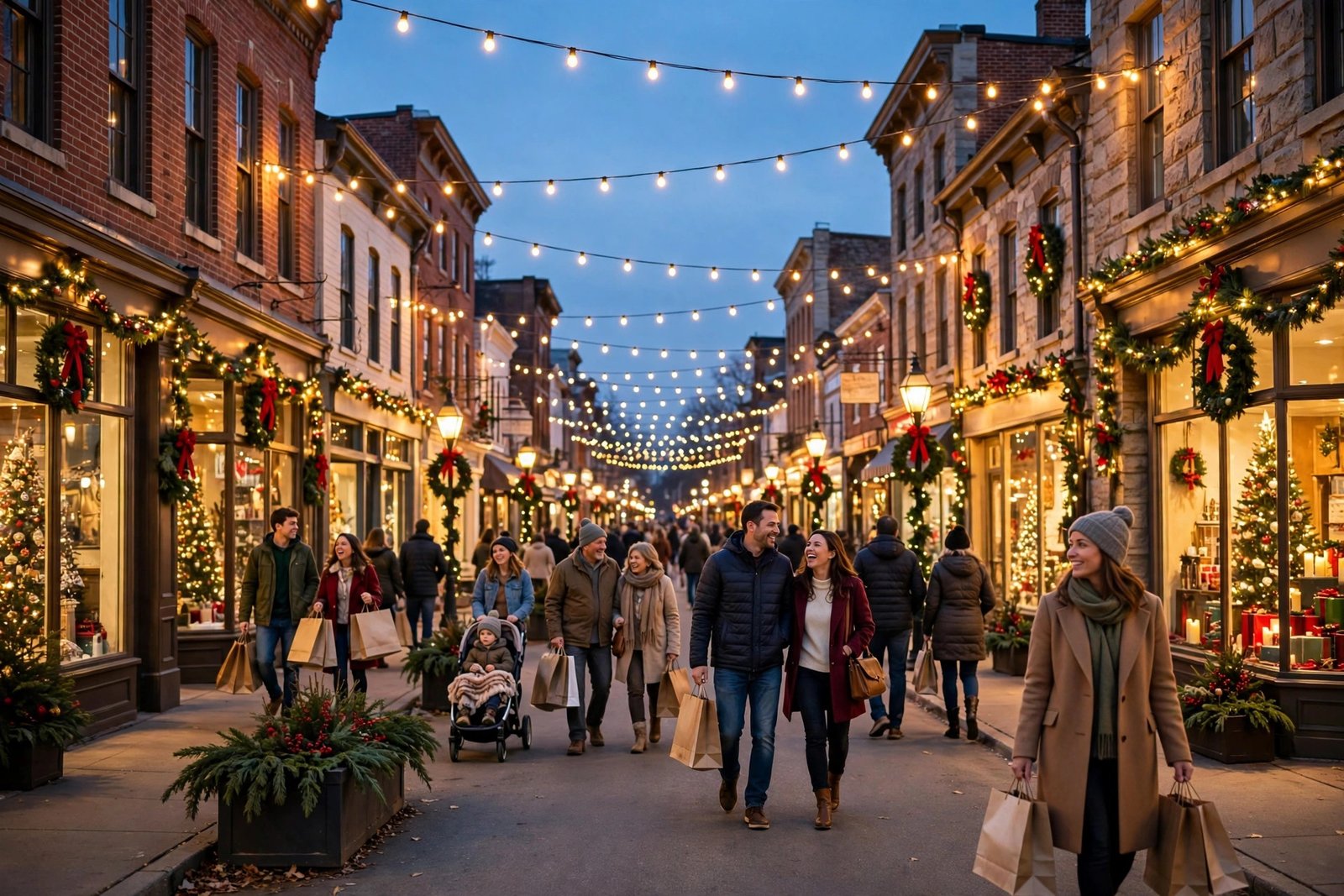
The holiday shopping season of 2026 is already underway, and it started earlier than ever. Long before the first Thanksgiving turkey hits the oven, retailers have rolled out deals, shoppers have begun ticking off gift lists, and the biggest shopping season on record is taking shape. If you felt like the holidays arrived in October this year, you were not imagining it. The season has genuinely moved earlier, and the numbers behind it explain why.
According to the National Retail Federation, the trade group that tracks American retail, holiday sales in November and December 2026 are forecast to reach $1.013 trillion, up 4.2 percent over 2025. If that forecast holds, it will be the first holiday season ever to pass the trillion-dollar mark. Growth is also speeding up: 2025 holiday sales reached $972 billion, up 3.1 percent over the year before. Retailers are hiring hundreds of thousands of seasonal workers to handle the rush, and shoppers are spreading their spending across more weeks than ever.
Why the Season Starts Earlier Every Year
The official holiday shopping season, as the National Retail Federation defines it, runs from November 1 through December 31. But in practice, the season now starts well before November. Retailers begin promoting holiday deals in October, and many shoppers take them up on it. The NRF’s October Holiday Consumer Survey found that 43 percent of holiday shoppers plan to begin shopping before November, with spreading out their budgets cited as the leading reason. Starting early is no longer a quirk of the super-organized. It is the mainstream strategy.
There are a few forces pushing the season earlier. The first is simple budgeting. Prices are higher than they were a few years ago, and spreading purchases across October, November, and December makes the total bill feel more manageable than cramming it all into a few frantic weeks. The second is the calendar of sales itself. Retailers now run major promotional events in October, and shoppers have learned that waiting until December does not necessarily mean a better price. The third is convenience: online shopping makes it easy to buy a gift the moment you think of it, rather than waiting for a designated shopping day.
The result is a season that looks less like a sprint and more like a marathon. Instead of one frantic weekend, holiday shopping now stretches across two full months and beyond, with peaks around Thanksgiving weekend, the weeks before Christmas, and even the days after Christmas, when gift cards and returns drive a final wave of spending.
A Trillion-Dollar Season: What the Forecast Really Means
The headline number is hard to ignore: $1.013 trillion in November and December retail sales, according to the NRF forecast released on October 15, 2026. That figure covers core retail and excludes automobile dealers, gasoline stations, and restaurants, so it reflects the stores and websites where most holiday gifts are actually bought. The forecast is built on economic modeling that takes in consumer spending, disposable personal income, employment, wages, inflation, and previous monthly retail sales.
It is worth understanding what the number does and does not say. The 4.2 percent growth figure is nominal, which means it includes the effect of price increases. The NRF itself notes that about half of the projected growth is expected to come from real consumer spending rather than price increases, while the rest reflects higher prices. In plain terms, Americans are buying more, but they are also paying more for what they buy. That distinction matters for shoppers trying to judge whether deals are genuinely good or simply keeping pace with inflation.
The forecast also reflects a consumer who is cautious but still spending. The NRF’s chief economist has pointed to continued resilience in consumer spending, with twelve consecutive months of retail sales growth heading into the season. At the same time, higher food and gasoline prices are expected to place greater pressure on lower-income households, while rising financial wealth continues to support spending among higher-income households. The season is not one story but two: many shoppers are hunting for value more carefully than ever, while others keep spending steadily.
Thanksgiving Weekend Still Matters, But It Is No Longer Everything
For all the talk of an earlier season, Thanksgiving weekend remains the emotional center of holiday shopping. The NRF’s October survey found that 64 percent of consumers say they are likely to wait until Thanksgiving weekend sales to do most of their holiday shopping. Black Friday, the day after Thanksgiving, remains a major promotional event, and Cyber Monday focuses the energy online. For many families, the weekend is as much a tradition as the meal itself: a day of deal-hunting together, whether in stores or on the couch with a laptop.
What has changed is that Thanksgiving weekend is now the peak of a longer season rather than the starting gun. Shoppers who start in October often use the weekend to finish their lists or to grab the big-ticket items they have been watching. Retailers, in turn, spread their best promotions across the whole period rather than betting everything on a single weekend. The result is less chaos on any single day and more opportunity to find a good price if you are patient and willing to compare.
If you are planning around Thanksgiving weekend, remember the practical side too. Stores will be crowded, popular items can sell out, and shipping cutoffs start to matter quickly after the weekend passes. Shopping early in the season is not just about saving money. It is also about avoiding the stress of a last-minute scramble when the item you want is out of stock or cannot arrive in time.
How Shoppers Are Adjusting Their Budgets in 2026
The NRF survey paints a clear picture of a shopper who is adapting rather than retreating. More than half of holiday shoppers, 56 percent, say the state of the economy will affect their spending plans this year. Among those shoppers, 43 percent plan to shop for sales more often, 31 percent will comparison shop online more often, and 29 percent will use coupons more often. These are not dramatic changes in behavior. They are the small, practical habits of people who still want to celebrate generously but refuse to overpay.
Comparison shopping has never been easier, and it is one of the most powerful tools in a shopper’s kit. Checking a price across a few retailers takes minutes online, and many stores will match a competitor’s price if you ask. Coupons, cashback offers, and loyalty programs add up quietly over a season of purchases. The shoppers who save the most are rarely the ones who find one miraculous deal. They are the ones who stack small savings across dozens of purchases.
Another smart adjustment is to set a budget before the season starts and to track spending as you go. It sounds obvious, but the long season makes it easy to lose track: a purchase in October feels disconnected from a purchase in December, even though both come out of the same holiday budget. Writing down a total gift budget, dividing it by person, and keeping a running tally turns a two-month marathon into something you can actually manage.
Online Shopping Leads the Way
One of the clearest trends in the 2026 season is the continued shift online. Forecasts from firms such as Bain and Company expect e-commerce to grow faster than overall retail this holiday season, with nonstore sales growing at roughly double the rate of the total. That fits what shoppers already know from experience: for many gifts, the easiest path is a few clicks, free shipping, and a package on the doorstep.
Online shopping also rewards the early starter. Shipping times lengthen as Christmas approaches, and the best delivery windows fill up. Ordering early means more shipping options, fewer surcharges, and less risk that a gift arrives late. It also means easier returns if something is not right, since you have weeks rather than days to sort it out. For gifts that need to be shipped to family in another state, early ordering is practically a necessity.
That said, stores are far from dead. Many shoppers still prefer to see and touch a gift before buying it, especially for clothing, jewelry, and electronics. The winning strategy for most people is a mix: browse in stores, compare prices online, and buy wherever the combination of price, convenience, and return policy is best. Retailers have noticed, and many now let you buy online and pick up in store, blending the two experiences.
The Seasonal Jobs Behind the Season
Behind every holiday display and delivery truck is a seasonal workforce, and 2026 is no exception. The NRF expects retailers to hire between 325,000 and 375,000 seasonal workers for the holiday period, roughly in line with last year’s estimated 356,000 seasonal jobs. These workers staff stores, warehouses, and delivery operations through the busiest weeks of the year, and many retailers are taking a cautious approach to hiring amid inflation and higher interest rates.
For job seekers, the long season is good news: seasonal hiring starts earlier too, with many positions opening in October. For shoppers, it is a reminder that the people helping you in a crowded store or delivering your package in December are often working their first holiday season. A little patience at the checkout goes a long way.
A Smarter Holiday Shopping Checklist for 2026
Start with a list, not a store. Write down every person you plan to buy for, a rough idea for each, and a spending target. Then work the list over the whole season instead of trying to finish it in one weekend. Check prices before you buy, and remember that a sale price is only a deal if it beats the price you would have paid anyway. Keep gift receipts, note return deadlines, and photograph anything valuable for your records.
Pay attention to shipping deadlines, especially for gifts going across the country. Carriers publish holiday shipping cutoffs each year, and missing one can mean the difference between a gift under the tree and a gift arriving in January. Ordering early sidesteps the problem entirely. Finally, watch out for scams: the holiday season brings a surge in fake deals, phishing messages, and counterfeit goods. If a price looks impossibly low, or a message pressures you to act immediately, slow down and verify the seller before you pay.
For the full forecast and consumer survey details, see the National Retail Federation’s coverage at nrf.com, the forecast summary at Retail Insight Network, and the analysis at AJOT.
Related reading
- Thanksgiving 2026 Travel: Record Crowds and Busiest Days
- USPS Holiday Shipping Deadlines for Christmas 2026
- Veterans Day 2026: History, Parades and Free Meals
Frequently Asked Questions
When does the holiday shopping season start in 2026?
The National Retail Federation defines the season as November 1 through December 31, but in practice many shoppers start in October, and 43 percent of holiday shoppers plan to begin before November.
How much will Americans spend this holiday season?
The National Retail Federation forecasts November and December retail sales of $1.013 trillion in 2026, up 4.2 percent from $972 billion in 2025. The figure excludes auto dealers, gas stations, and restaurants.
Is Thanksgiving weekend still the biggest shopping weekend?
Yes, it remains the peak: 64 percent of consumers say they are likely to wait until Thanksgiving weekend sales to do most of their holiday shopping, even as the overall season stretches longer.
How are shoppers coping with higher prices?
According to the NRF survey, 43 percent of affected shoppers plan to shop for sales more often, 31 percent will comparison shop online more often, and 29 percent will use coupons more often.
When should I order gifts to arrive by Christmas?
Order as early as you can, especially for gifts shipping across the country. Shipping options narrow and cutoffs approach quickly after Thanksgiving weekend, so early orders avoid the last-minute rush.